
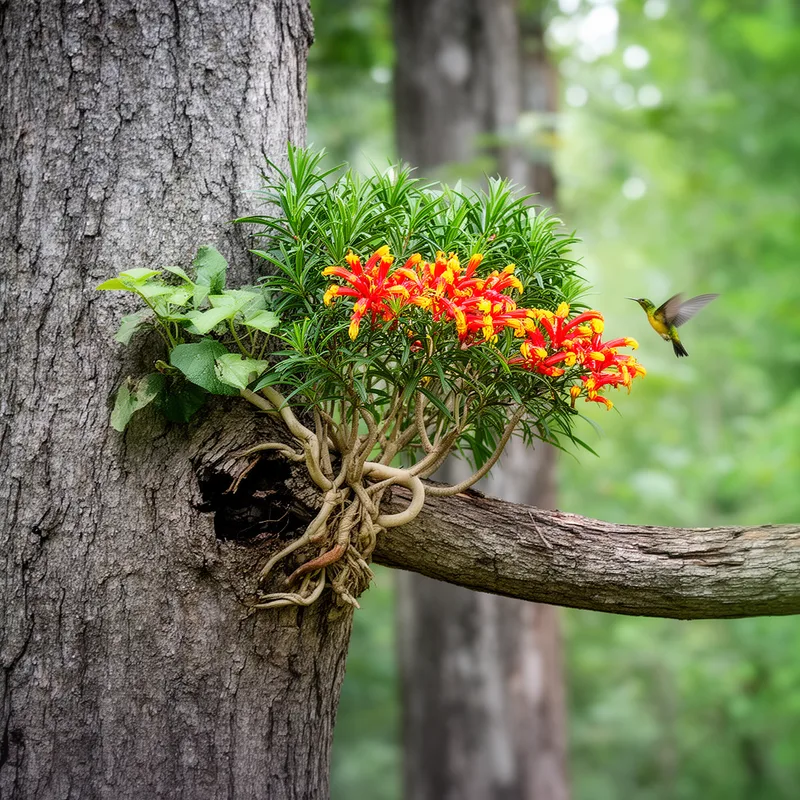
Loranthaceae
- noun
- /lɔːˈrænθəˌsiː/
- Specialized
- Many species in the Loranthaceae family derive nutrients from their host trees through specialized structures called haustoria.
Examples
-
The Loranthaceae family includes various species of mistletoe.
-
The bright flowers of some Loranthaceae species attract birds for pollination.
-
Many species in the Loranthaceae family are known for their parasitic growth on tree hosts.
-
Scientists have debated whether to include Viscaceae within Loranthaceae in botanical classifications.
-
Many Loranthaceae plants are known for their unique attachment to trees.
-
The Loranthaceae family includes several types of mistletoe that parasitize a variety of tree species.
-
Some members of the Loranthaceae family are recognized for their vibrant flowers that attract pollinators.
Synonyms

A group of plants like mistletoe that grow on other plants and take water and food from them
A family of flowering plants that grow on other plants, like mistletoe
Surface Forms
Morphology
Loranthaceae = Loranthus (opaque) = Loranth + aceae
The family name is formed by attaching the specialized Latin taxonomic suffix '-aceae' to a genus stem; this formation is specialized and not recoverable by an average learner.
Etymology
Loranthaceae comes from the plant name Loranthus plus the botanical ending -aceae, which means 'family' of plants. Loranthus is a kind of mistletoe, so the name tells you this is the 'family' of mistletoe-like, often parasitic plants that grow on other trees.

