
Viscaceae
- noun
- /vɪsˈkeɪ.iː/
- Specialized
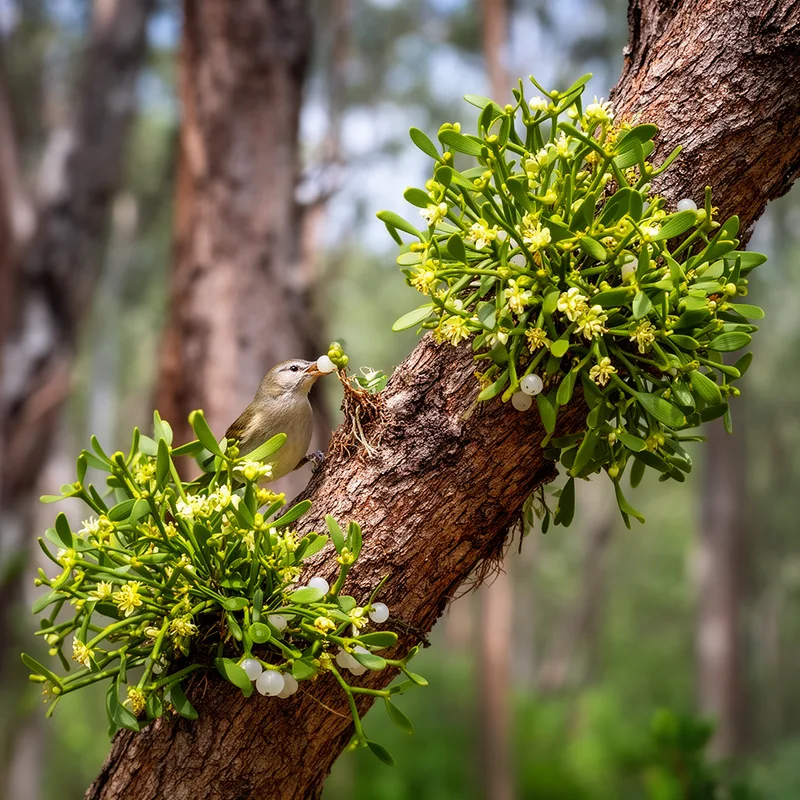
- The Viscaceae are known for their distinctive parasitic habit, often seen in mistletoe plants.
Examples
-
Several species in the Viscaceae family are important for their role in bird-mediated seed dispersal.
-
Botanists debate whether Viscaceae should be classified as its own family or as part of Loranthaceae.
-
The Viscaceae family includes many species of mistletoe.
-
Did you know that Viscaceae are often found in trees?
-
Several species in the Viscaceae family are important for their role in bird-mediated seed dispersal.
-
The Viscaceae are known for their distinctive parasitic habit, often seen in mistletoe plants.
-
The Viscaceae family includes many species of mistletoe.
Synonyms

A group of plants like mistletoe that grow on other plants and take water and food from them
Surface Forms
Etymology
Viscaceae comes from the Latin viscum, meaning 'mistletoe' or the sticky substance from its berries, and the ending -aceae, a common part used to name plant families like Rosaceae, the 'rose' family. So Viscaceae literally means the 'mistletoe family', which fits because these plants are mistletoes that often live on other trees and have sticky berries.

