
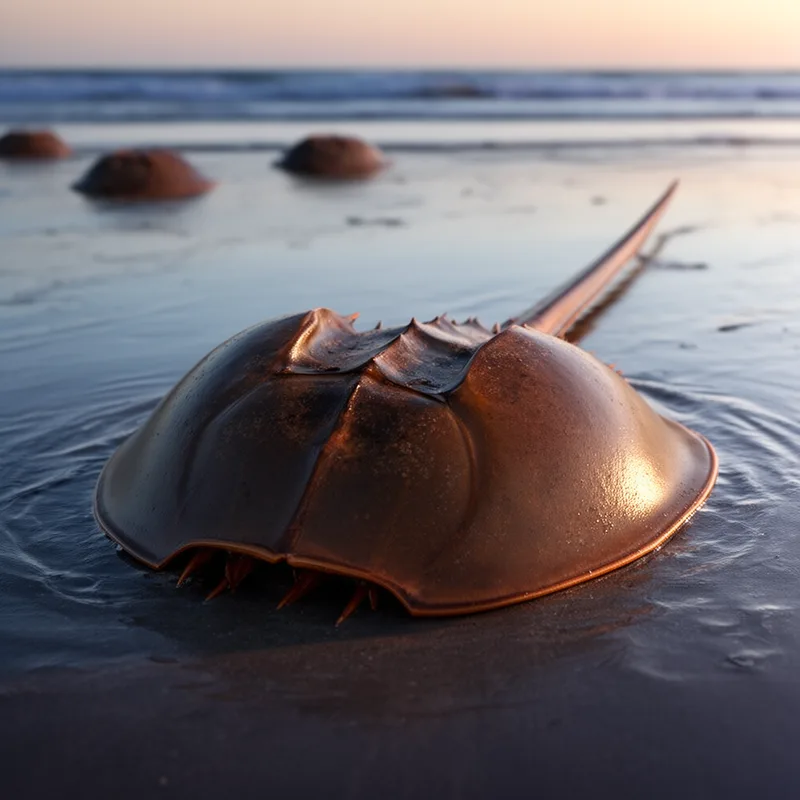
Limulus polyphemus
- noun
- /ˈlɪmələs pəˈlɪfɪməs/
- Specialized
- The blood of Limulus polyphemus is used in medical research for detecting bacterial endotoxins.
Examples
-
Several Limulus polyphemus were observed crawling across the tidal flats at dusk.
-
The Limulus polyphemus is often found along the Atlantic coast.
-
Conservation efforts are underway to protect Limulus polyphemus populations along the eastern seaboard.
-
Look at that Limulus polyphemus!
-
Conservation efforts are underway to protect Limulus polyphemus populations along the eastern seaboard.
-
Several Limulus polyphemus were observed crawling across the tidal flats at dusk.
-
The blood of Limulus polyphemus is used in medical research for detecting bacterial endotoxins.
Synonyms

 2
7.8
2
7.8

A large sea animal with a hard shell shaped like a horseshoe and a long pointed tail

A large sea animal like a crab with a hard domed shell and pointed tail
Surface Forms
Morphology
Limulus + polyphemus
The form is a Linnaean binomial: knowing 'Limulus' (the genus name for horseshoe crabs) lets a learner identify that the phrase refers to a horseshoe crab, but the species epithet 'polyphemus' is a Latinized/mythological label that does not transparently add semantic content. Because the genus gives the core referent but the second element is arbitrary/uninformative to most learners, the expression is only partially predictable.
Etymology
Limulus polyphemus is a scientific name given by early naturalists. Limulus is like an old Latin word for a 'mud creature' and polyphemus refers to the giant 'Polyphemus' from Greek stories because the crab's large, round shell reminded people of a giant's eye, so the name points to the animal's big, unusual shape.