
Xiphosurus polyphemus
- noun
- /ˌzɪfəˈsʊrəs ˌpɒlɪˈfiːməs/
- Specialized
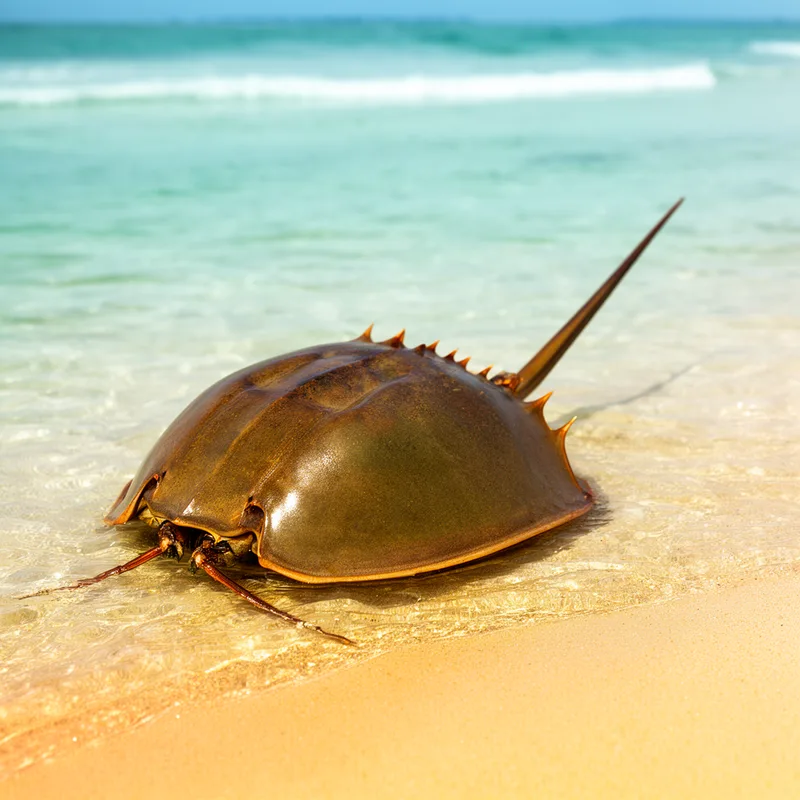
- The carapace of Xiphosurus polyphemus resembles a horseshoe, giving it its common name of horseshoe crab.
Examples
-
The shell of Xiphosurus polyphemus is sometimes found washed up on Atlantic beaches.
-
Some aquariums feature living specimens of Xiphosurus polyphemus in their marine exhibits.
-
Scientists often study the blood of Xiphosurus polyphemus for its remarkable clotting properties.
-
The Xiphosurus polyphemus is often found along the Atlantic coast.
-
Many people are fascinated by the Xiphosurus polyphemus due to its unique appearance.
-
Researchers have discovered that the blood of Xiphosurus polyphemus has unique properties that can be used in medical research.
-
At the aquarium, visitors can observe live specimens of Xiphosurus polyphemus swimming in a large tank.
Synonyms

 2
7.8
2
7.8

A large sea animal with a hard shell shaped like a horseshoe and a long pointed tail

A large sea animal with a hard horseshoe-shaped shell and a long pointed tail
Surface Forms
Morphology
Xiphosurus + polyphemus
This is a Linnaean scientific binomial composed of Latin/Greek elements that are not ordinary English words, so a B1 learner who 'knows the constituent words' would not have productive knowledge of these morphemes. The label functions as an arbitrary taxonomic name rather than a compositional phrase whose meaning ('Atlantic horseshoe crab') can be derived from its parts. Any etymological hints (e.g. xipho- or Polyphemus) require specialist or classical-language knowledge beyond B1, making the expression non-compositional for typical learners.
Etymology
The name Xiphosurus polyphemus may come from Greek words that describe how it looks. The part xiphos means 'sword' for its long pointed tail, and polyphemus suggests a big, unusual creature, so the name fits this large horseshoe-shaped crab with a stiff tail.