

Lavandula angustifolia
- noun
- /ləˈvændjʊlə æŋˌɡʌstɪˈfoʊliə/
- Specialized
- Gardeners often plant Lavandula angustifolia for its beautiful aroma and attractive lilac flowers.
Examples
-
The essential oil extracted from Lavandula angustifolia is widely used for its calming properties.
-
Lavandula angustifolia thrives in well-drained soil and full sun.
-
The garden is filled with Lavandula angustifolia.
-
I love the scent of Lavandula angustifolia in the summer.
-
Gardeners often plant Lavandula angustifolia for its beautiful aroma and attractive lilac flowers.
-
The essential oil extracted from Lavandula angustifolia is widely used for its calming properties.
-
I love the scent of Lavandula angustifolia in the summer.
Synonyms

A small fragrant shrub with purple flowers grown for dried flowers and oil
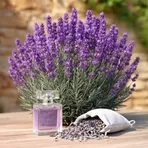
A small Mediterranean shrub with purple flowers that smell pleasant and are used in perfume and small scented bags
How Fragrant
- Specialized

- Specialized
- Specialized
- Specialized
Surface Forms
Morphology
Lavandula + angustifolia
The scientific name is compositional: 'Lavandula' identifies the lavender genus and 'angustifolia' is a Latin epithet meaning 'narrow‑leaved' (i.e. a descriptive species name). Thus, if a learner knows both constituents, the meaning 'narrow‑leaved Lavandula / English lavender' is directly derivable; (though in practice the Latin epithet may be unknown to many learners).
Etymology
Lavandula angustifolia may come from old words: Lavandula from 'to wash' and angustifolia from 'narrow leaves'. People used this small shrub with purple flowers in baths and perfumes, so Lavandula angustifolia, called 'English lavender', is known today for its strong, calming scent.

