
Lactuca scariola
- noun
- Specialized
- Farmers often struggle to control the spread of Lactuca scariola in their fields due to its rapid growth.
Examples
-
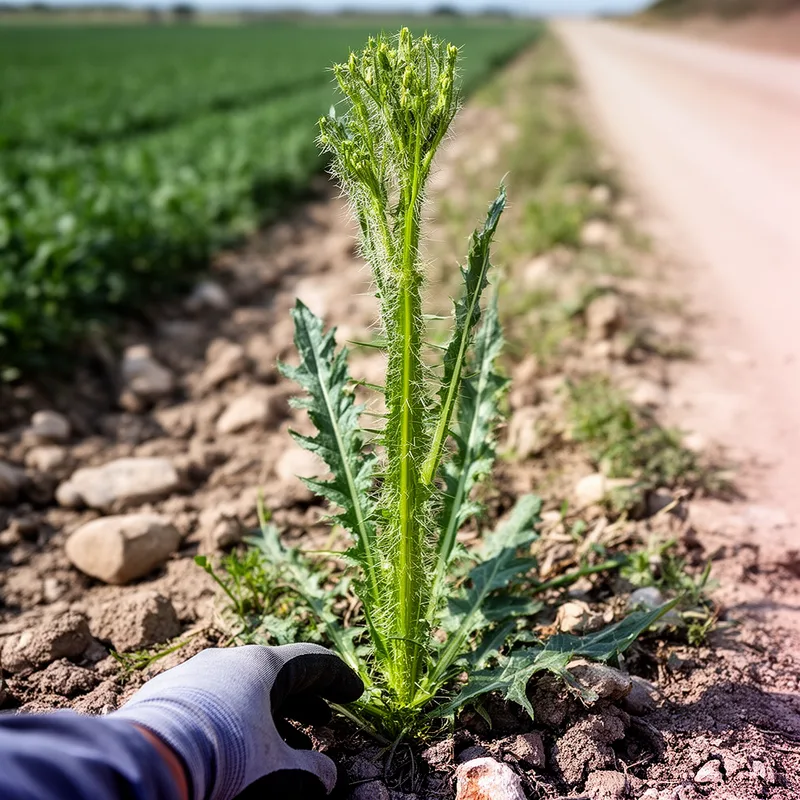
The prickly stems are a distinguishing feature of Lactuca scariola, making it easy to identify among wild plants.
-
Lactuca scariola grows abundantly in neglected gardens and can quickly become a weed if left unchecked.
-
Lactuca scariola can be found growing alongside roads and in disturbed soils across many regions.
-
The Lactuca scariola is often found in disturbed areas.
-
Many gardeners consider Lactuca scariola a nuisance.
-
Due to its resilience, Lactuca scariola often appears in areas that have been recently disturbed, such as construction sites.
-
Gardeners frequently complain about the invasive nature of Lactuca scariola, as it can overshadow more desirable plants.
Synonyms

A wild plant from Europe with prickly stems that often grows in gardens as a weed

A prickly wild plant with yellow flowers that grows like a weed

A wild lettuce plant with prickly leaves and stems that often grows as a weed
Surface Forms
Morphology
Lactuca + scariola
The genus name 'Lactuca' signals a lettuce-related plant (so a learner who knows that could infer it is a plant), but the Latin species epithet 'scariola' is obscure and does not transparently convey the specific senses (wild lettuce, prickly stems, weed). Botanical binomials are technical and only partly informative to a B1 learner, so the overall meaning is only partially predictable from the parts.
Etymology
Lactuca scariola comes from old Latin words: Lactuca comes from 'lac' meaning 'milk' because the plant has a white, milky sap, and scariola was an old name for a wild lettuce with prickly stems. So the name helps you remember it is a wild, often a 'weed' lettuce with milky juice and sharp stems.

