

prickly lettuce
- noun
- /ˈprɪkli ˈlɛtɪs/
- US
- The garden is full of prickly lettuce this year.
Examples
-
Prickly lettuce often invades gardens and fields, making it difficult to control other plants.
-
Farmers are concerned about the rapid spread of prickly lettuce in their crops.
-
The stems of prickly lettuce can scratch the skin if handled carelessly.
-
Many farmers consider prickly lettuce to be a nuisance.
-
In my garden, prickly lettuce has grown alongside other herbs and vegetables.
-
Farmers often try to control the spread of prickly lettuce due to its weed-like nature.
-
Many foragers identify prickly lettuce as a wild edible, despite its bitter taste.
Synonyms

A wild lettuce plant with prickly leaves and stems that often grows as a weed

A prickly wild plant with yellow flowers that grows like a weed
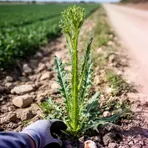
A wild lettuce with prickly stems that often grows as a weed
How Spiny
 69
1.8
69
1.8

 15
5.6
15
5.6
- UK
- US
22
1.0
Surface Forms
Morphology
The noun phrase denotes a lettuce that is 'prickly' — i.e., a lettuce plant with thorns or spiny stems — which a learner can directly infer from the adjective 'prickly' and the noun 'lettuce'. This is a straightforward descriptive adjective + noun composition (common cross-linguistically), so a B1 learner who knows both constituents will readily understand the meaning.
Etymology
Prickly lettuce gets its name from how the plant looks: the word prickly refers to the sharp hairs on its stems that can scratch, and lettuce shows it looks like garden lettuce. So the name tells us it is a 'wild' or 'troublesome' lettuce that can invade fields and gardens.