

Juniperus
- noun
- /ˈdʒuːnɪpərəs/
- Specialized
- Many birds feed on the berries produced by Juniperus plants.
Examples
-
Some of our sites also had western juniper (Juniperus occidentalis) and cheatgrass (Bromus tectorum) in the vicinity.
Academic text (2017) -
The Juniperus species is often used in landscaping for its attractive foliage.
-
In traditional herbal medicine, Juniperus is believed to have various health benefits.
Synonyms

 10
5.5
10
5.5

A small evergreen tree or shrub with needle leaves and berry-like cones used in gardens and to flavor gin
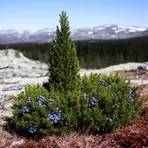
A group of evergreen trees and shrubs called junipers that grow in northern parts of the world
Compounds
- Specialized
A group of evergreen trees and shrubs called junipers that grow in northern parts of the world

- Specialized
A low juniper that spreads across the ground to make a thick cover

- Specialized
A small juniper tree from western Texas and Mexican mountains with drooping branches
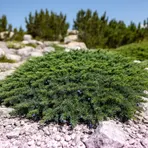
- Specialized
A low spreading juniper shrub from Europe and Asia used as ground cover

- Specialized
A small evergreen tree like a red cedar that grows in coastal swamps of the southeastern United States
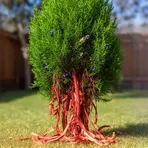
- Specialized
A small evergreen tree with reddish-brown peeling bark and small sharp leaves

- Specialized
A small to medium evergreen tree with dense, pyramid-shaped foliage often grown in Bermuda gardens
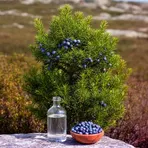
- Specialized
An evergreen bush or small tree with needle leaves and blue-black berries used to flavor gin
Surface Forms
Etymology
Juniperus is the old Latin name for the juniper tree and is the scientific form of the common word juniper, whose berries give gin much of its flavor. A helpful way to remember it is to think of the start juni- like junior, from an old idea of 'young', which gives the image of fresh, evergreen growth and explains why Juniperus names these evergreen trees and shrubs.