

Jerusalem artichoke sunflower
- noun
- /ˌdʒəˈruːsələm ˈɑːrtɪˌtʃoʊk ˈsʌnˌflaʊər/
- US
- She harvested several Jerusalem artichoke sunflower tubers from her garden for making soup.
Examples
-
The Jerusalem artichoke sunflower is often grown in home gardens.
-
The Jerusalem artichoke sunflower is cultivated for its knobby, edible tubers in many regions.
-
Farmers appreciate the Jerusalem artichoke sunflower for its hardiness and ability to thrive in poor soils.
-
Many people enjoy the flavor of Jerusalem artichoke sunflowers.
-
Gardeners often grow Jerusalem artichoke sunflowers for their delicious tubers and beautiful yellow flowers.
-
The Jerusalem artichoke sunflower is known for its ability to thrive in poor soil conditions.
-
For a healthy snack, try roasting the tubers of the Jerusalem artichoke sunflower until they are golden brown.
Synonyms

 1
9.5
1
9.5

A crunchy pale root vegetable from a sunflower, eaten raw or cooked


 1
7.7
1
7.7
A plant with knobby edible roots eaten as a vegetable
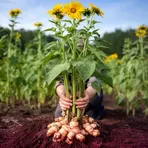
A tall plant like a sunflower that people grow for edible tubers

A tall plant with edible knobby roots that people eat like potatoes, also called Jerusalem artichoke
Surface Forms
Morphology
Jerusalem + artichoke + sunflower
The phrase clearly signals a plant (sunflower) related to or named with 'artichoke', so a B1 learner who knows 'artichoke' and 'sunflower' would infer it is a kind of plant and possibly edible. However, the historical use of 'Jerusalem' is arbitrary (not indicating geographic origin) and the specific sense—a tuber-producing Helianthus species—cannot be fully derived from the parts. Because some information is recoverable from the constituents but key semantic details are unpredictable, this is best classified as semi-transparent.
Etymology
Jerusalem artichoke sunflower gets its name from a simple picture: it is a kind of sunflower with large, knobbly edible roots that taste a bit like an artichoke. One popular story says the word 'Jerusalem' came from the Italian word 'girasole', which means 'sunflower', so the name links the flower's look with its artichoke-like roots.