
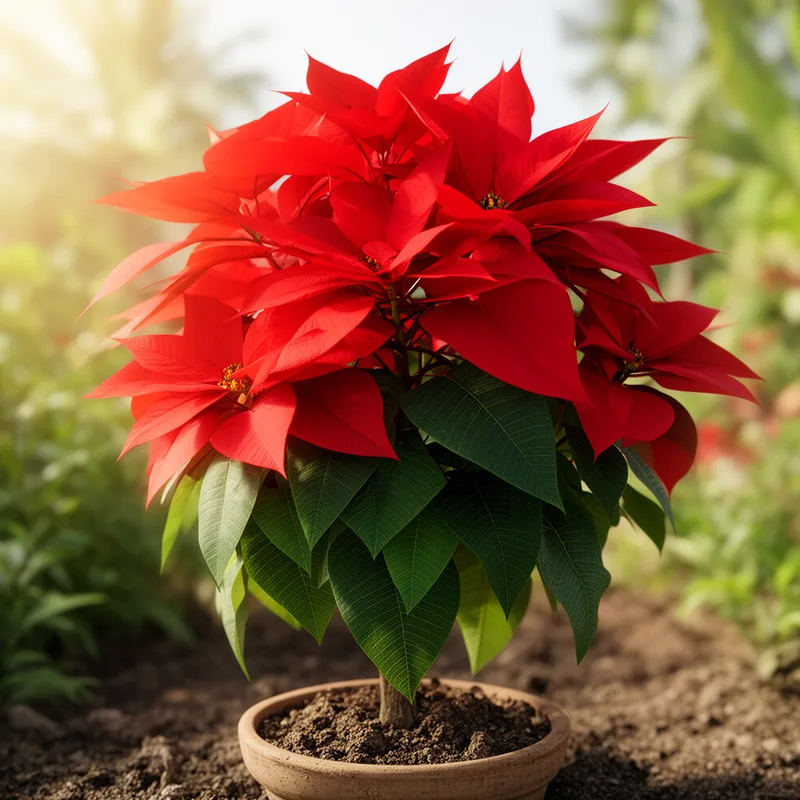
Japanese poinsettia
- noun
- The Japanese poinsettia thrives in warm climates and produces vibrant bracts in the summer.
Examples
-
Gardeners often plant Japanese poinsettia for its unique appearance and colorful foliage.
-
I mistook a Japanese poinsettia for its more common relative during my trip to Florida.
-
The Japanese poinsettia blooms beautifully in the summer.
-
I bought a Japanese poinsettia for my garden.
-
Gardeners love the vibrant colors of the Japanese poinsettia, especially during the holiday season.
-
The Japanese poinsettia is often chosen for landscaping because of its stunning red bracts.
-
In warm climates, the Japanese poinsettia can grow up to three feet tall and makes a striking addition to any garden.
Synonyms

A flowering plant with bright colored leaves around its flowers found from the southern United States to Peru

A plant with bright red leaves often used for holiday decoration
Surface Forms
Morphology
The phrase is a straightforward adjective+noun composition: 'Japanese' denotes origin or association and 'poinsettia' names the plant, so a B1 learner who knows both words can infer it is a poinsettia related to Japan or a Japanese variety. There is no idiomatic or metaphorical shift in meaning, making the phrase readily interpretable from its parts.
Etymology
Japanese poinsettia may come from people comparing this bright plant to the familiar poinsettia, while adding Japanese to suggest a 'decorative' or 'exotic' look. So the name helps you remember it is a showy, poinsettia-like plant rather than meaning it comes from Japan.

