
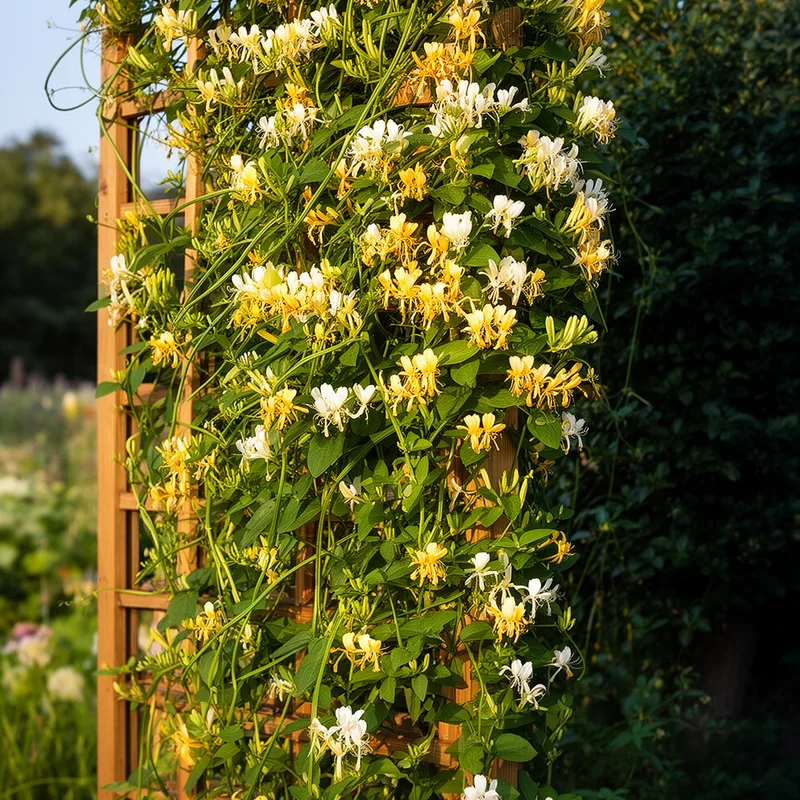
Japanese honeysuckle
- noun
- /ˈdʒæpəˌniːz ˈhʌnɪˌsʌkəl/
- The Japanese honeysuckle has beautiful, fragrant flowers.
Examples
-
The garden fence was covered in Japanese honeysuckle, filling the air with a sweet scent.
-
She planted Japanese honeysuckle along the trellis to enjoy its fragrant blooms every summer.
-
Many conservationists worry that Japanese honeysuckle is crowding out native plant species.
-
Many gardeners love the Japanese honeysuckle for its scent.
-
The garden was filled with the sweet scent of Japanese honeysuckle as it climbed the trellis.
-
Many homeowners in the area are cautious about planting Japanese honeysuckle due to its invasive nature.
-
The vibrant flowers of Japanese honeysuckle attract various pollinators, making it a popular choice for gardens.
Synonyms
A climbing plant from Asia with sweet white flowers that turn yellow and often spreads to crowd out other plants
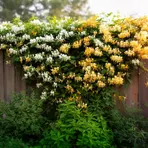
A garden vine with fragrant white and yellow flowers that spreads quickly and takes over other plants
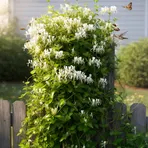
A fast-growing climbing plant with sweet-smelling white flowers that often covers fences and spreads quickly
Surface Forms
Morphology
This is a straightforward adjective + noun combination where 'Japanese' specifies origin/type of the noun 'honeysuckle', so the meaning (a honeysuckle associated with Japan or of that variety) is directly inferable from the parts. The compositional pattern is common across languages and follows standard English noun modification, so a B1 learner who knows both words would understand it.
Etymology
The plant name Japanese honeysuckle combines Japanese (where the plant comes from) and honeysuckle (flowers with sweet nectar you can 'suck' like honey). So the name helps you remember it is a sweet-smelling, climbing plant from Japan.

