
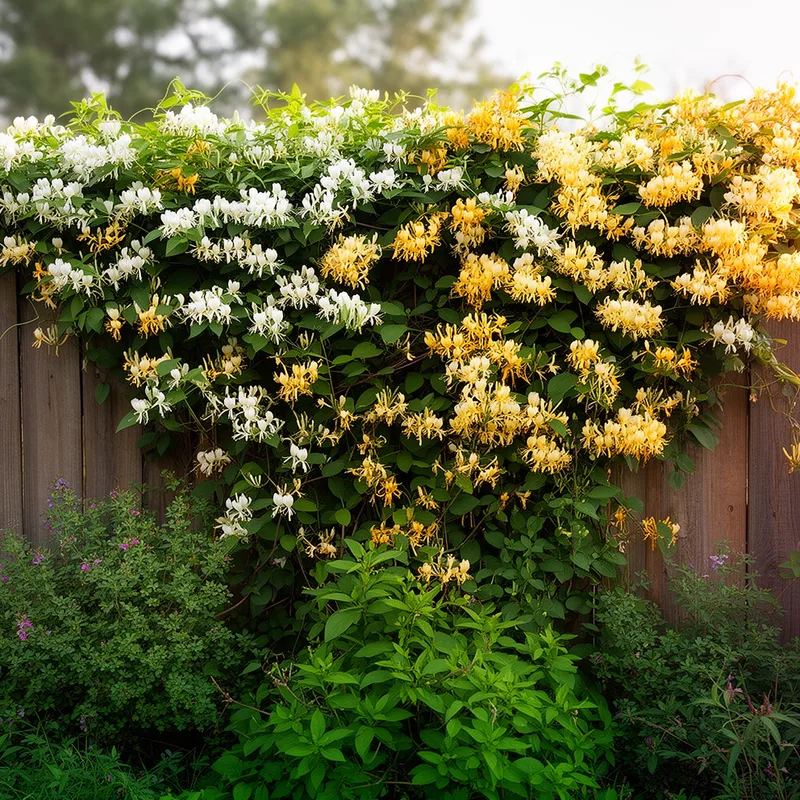
Lonicera japonica halliana
- noun
- Specialized
- Gardeners appreciate Lonicera japonica halliana for its fragrant white and yellow flowers, though it can become invasive.
Examples
-
The southeastern United States has seen the spread of Lonicera japonica halliana in many natural areas.
-
Lonicera japonica halliana has quickly taken over the fence in our backyard with its dense, leafy vines.
-
The Lonicera japonica halliana is often found in gardens.
-
Have you seen the Lonicera japonica halliana blooming?
-
Lonicera japonica halliana is known for its rapid growth and beautiful flowers, but it often outcompetes native plants in gardens.
-
Many homeowners have removed Lonicera japonica halliana from their yards to prevent it from invading their landscapes.
-
The dense vines of Lonicera japonica halliana can easily cover fences and trellises within a single growing season.
Synonyms
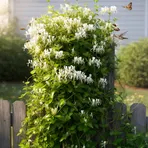
A fast-growing climbing plant with sweet-smelling white flowers that often covers fences and spreads quickly
Surface Forms
Morphology
Lonicera + japonica + halliana
This is a botanical Latin name built from a genus (Lonicera) plus species/cultivar epithets (japonica, halliana). If a learner knows the constituent meanings and the Latin binomial convention they can infer it is a type/variety of Japanese honeysuckle, but details like growth habit or invasiveness are not derivable from the name alone, so the relation is only partially predictable.
Etymology
Lonicera japonica halliana is a type of Japanese honeysuckle vine that climbs fences and grows thick, fragrant leaves and flowers. Because it easily 'spreads' and can take over yards and wild areas, especially in the southeastern United States, people call it 'invasive', so the name brings to mind a fast-growing, fence-hugging plant.

