
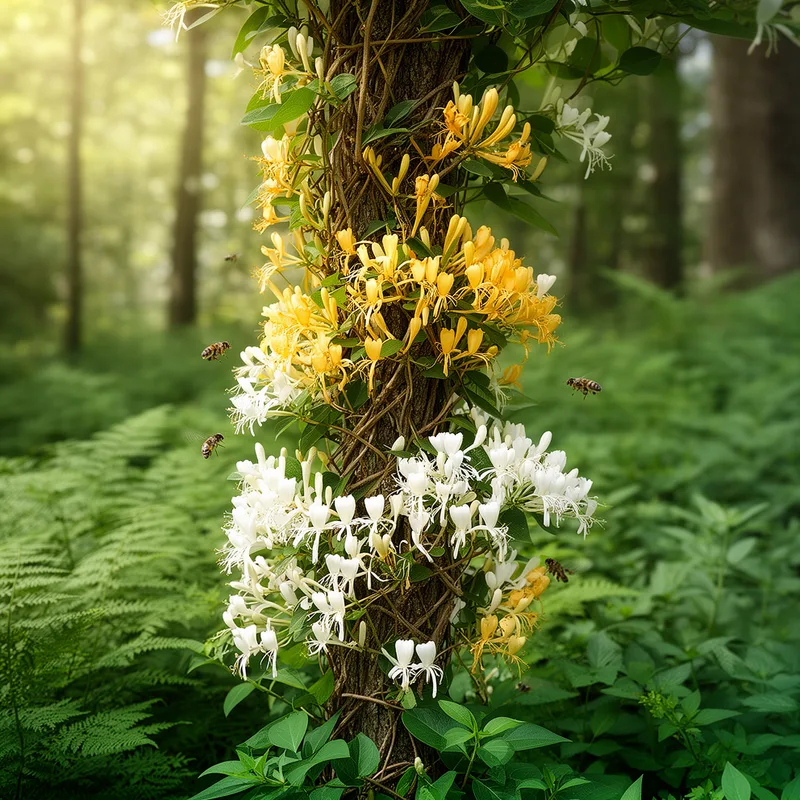
Lonicera japonica
- noun
- Specialized
- Gardeners are warned that Lonicera japonica can become invasive if not controlled properly.
Examples
-
The fragrant flowers of Lonicera japonica attract bees and butterflies to the garden.
-
Lonicera japonica spreads easily in woodland areas, sometimes outcompeting native plants.
-
The garden was filled with Lonicera japonica this spring.
-
Have you seen the Lonicera japonica blooming?
-
The fragrant flowers of Lonicera japonica attract bees and butterflies to the garden.
-
Gardeners are warned that Lonicera japonica can become invasive if not controlled properly.
-
Lonicera japonica spreads easily in woodland areas, sometimes outcompeting native plants.
Synonyms

A climbing plant with sweet-smelling white flowers that turn yellow and spread quickly
A garden vine with fragrant white and yellow flowers that spreads quickly and takes over other plants
A fast-growing climbing plant with sweet-smelling white flowers that often covers fences and spreads quickly
Surface Forms
Morphology
This is a botanical binomial formed compositionally from the genus name Lonicera (a honeysuckle) and the species epithet japonica (indicating a Japanese/ornamental form). A learner who knows both constituents can infer it denotes a specific honeysuckle species, so the meaning is directly derivable from the parts.
Etymology
Lonicera japonica comes from two parts: Lonicera is named after an old German plant expert, Adam Lonicer, and japonica is a Latin word meaning 'from Japan'. So the name literally says 'Lonicer's plant from Japan', which helps explain why we call it the Japanese honeysuckle.

