

Indian millet
- noun
- Indian
- Ranchers often plant Indian millet to provide food for livestock in arid regions.
Examples
-
Researchers are studying Indian millet as a drought-resistant crop alternative.
-
The tall stalks of Indian millet help prevent soil erosion on open plains.
-
Farmers in Rajasthan grow Indian millet for livestock.
-
Did you know that Indian millet is very nutritious?
-
Farmers in Rajasthan cultivate Indian millet as a nutritious feed for their cattle.
-
Ranchers often plant Indian millet to provide food for livestock in arid regions.
-
Research indicates that Indian millet can thrive in dry conditions and is beneficial for sustainable agriculture.
Synonyms

 8
4.3
8
4.3

A small grain from a grass plant used as food for people and animals

A grass plant that tolerates drought and is grown for small seeds and animal feed

A rough grass that grows in dry places and is grown for grain and animal feed
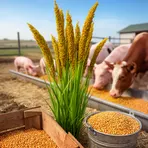
A grass that grows once a year for its grain and is used as animal feed
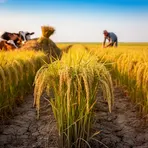
A rough grass grown each year for grain or animal feed that grows well in dry soil
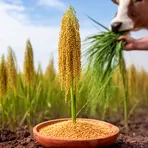
A small grain plant grown for food and animal feed

A coarse grass grown each year for grain and to feed animals

A rough grass people grow each year for its seeds and animal feed
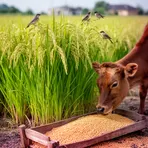
A grass grown for its seeds and animal feed
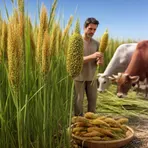
A tall grass with thick round seed heads that farmers grow for grain and animal food
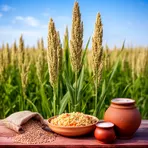
A tall grass grown for grain used for food, animal feed and making beer
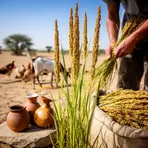
A tall grass grown in dry areas for its edible grain, animal feed, and brewing

A tall grass grown in Africa for food for people and animals
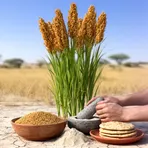
A plant that grows in dry regions and has seeds used to make a somewhat bitter flour

A cereal plant from Asia and Africa with small seeds used to make flour

A coarse grass that grows each year, often seen as a weed and used for hay or grazing
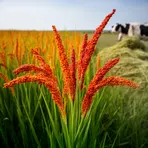
A grass with orange to red grains on long rough spikes grown for animal feed
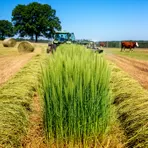
An annual grass grown for hay in the southern United States

A tall grass that lives for many years, spreads by underground stems, and is grown for farm animal food
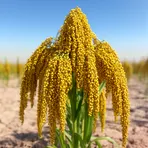
A grain plant with yellow seeds in large hanging spikes
Surface Forms
Morphology
The noun phrase is fully compositional: 'Indian' (pertaining to India) modifies 'millet' (a small-seeded cereal), so the phrase denotes a type or variety of millet associated with India. This adjective + noun pattern is transparent and cross-linguistically common, so a B1 learner who knows the constituents will readily infer the meaning.
Etymology
Indian millet may come from early farmers who found a tough millet growing in dry parts of India and other hot places, and they called the plant Indian to show where it came from and used it as 'animal feed' and a simple grain. So today Indian millet means a hardy grass that can grow with little rain and is used as 'animal feed' or a 'cereal crop'.