

Italian millet
- noun
- /ɪˈtæljən ˈmɪlɪt/
- Italian millet is valued by farmers for its ability to grow in dry, poor soils.
Examples
-
The livestock were fed hay made from Italian millet during the drought.
-
Farmers often grow Italian millet in dry regions.
-
Many Asian countries cultivate Italian millet as a staple food crop.
-
Did you know that Italian millet is great for livestock?
-
Italian millet is an ideal crop for farmers in arid areas because it can thrive in drought conditions.
-
During the summer, many farmers harvest Italian millet to use as forage for their animals.
-
Because Italian millet requires less water than other grains, it is increasingly popular among sustainable farmers.
Synonyms

A grass plant that tolerates drought and is grown for small seeds and animal feed

A rough grass that grows in dry places and is grown for grain and animal feed
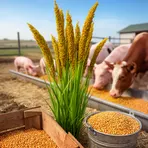
A grass that grows once a year for its grain and is used as animal feed

A variety of millet with orange to red grains on long bristly spikes
Surface Forms
Morphology
The phrase 'Italian millet' is a straightforward adjective + noun combination naming a variety of millet associated with Italy; a B1 learner who knows 'Italian' and 'millet' can infer this meaning. This compositional country‑modifier pattern is common cross‑linguistically and not idiomatic, so the meaning is transparent.
Etymology
Italian millet may come from a type of millet that Italian farmers grew a lot. Because this coarse grass was used for 'grain', 'hay', and 'forage', people kept the name and now use Italian millet for this hardy crop.

