

Setaria italica
- noun
- Specialized
- Setaria italica is widely cultivated in Asia for its grain, known as foxtail millet.
Examples
-
Farmers prefer Setaria italica because it tolerates drought and poor soil conditions.
-
The hay produced from Setaria italica is used to feed livestock during the dry season.
-
Farmers in Italy often cultivate Setaria italica for its grain.
-
Did you know that Setaria italica is drought-resistant?
-
Setaria italica is a popular choice among farmers for producing nutritious grain known as foxtail millet.
-
Many regions rely on Setaria italica as a drought-resistant crop that thrives in poor soil conditions.
-
The forage from Setaria italica is highly valued for feeding livestock during times of scarce resources.
Synonyms

A rough grass that grows in dry places and is grown for grain and animal feed
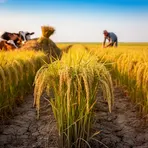
A rough grass grown each year for grain or animal feed that grows well in dry soil
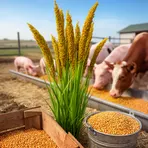
A grass that grows once a year for its grain and is used as animal feed
Surface Forms
Morphology
Setaria + italica
The binomial combines the genus name 'Setaria' (a type of grass) with the Latin epithet 'italica' (literally ‘of Italy’), so a learner who knows those constituents can infer it is a particular species of Setaria likely associated with Italy. However, 'italica' is not an English lexical item and species names are a taxonomic convention, so the specific common name 'foxtail millet' and the plant's agronomic properties are not fully derivable, making the transparency only partial.
Etymology
Setaria italica comes from Latin: seta meaning 'bristle' because the plant's seed head looks like a bristly fox tail, and italica meaning 'from Italy'. So the name gives an easy picture of a rough grass whose grain is grown as foxtail millet and can grow in dry places.

