
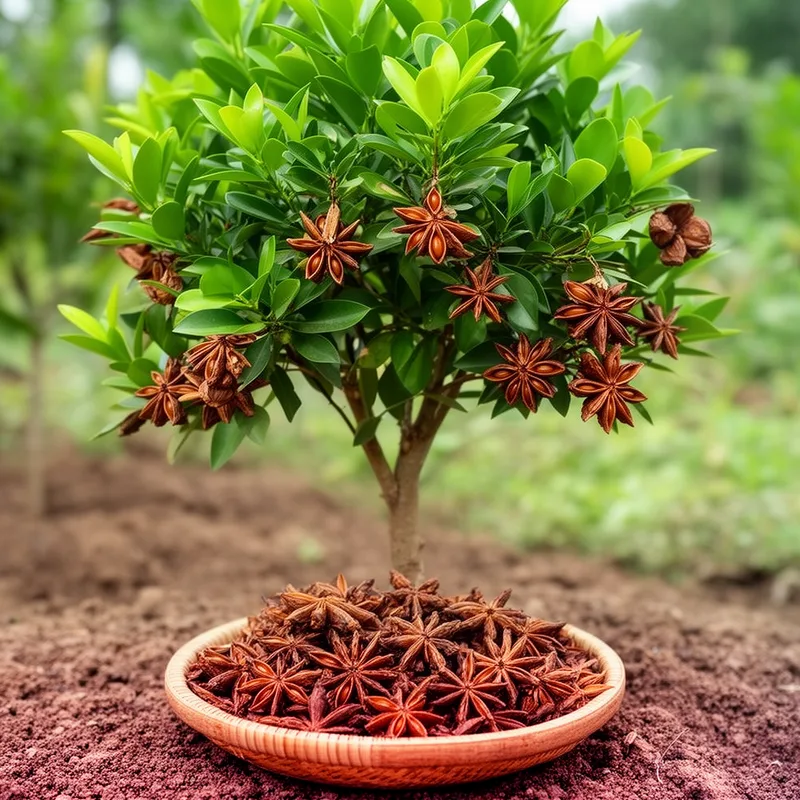
Illicium verum
- noun
- Specialized
- The fruits of Illicium verum are often mistaken for those of similar but toxic species.
Examples
-
Many traditional Chinese dishes include Illicium verum for its distinctive aroma and flavor.
-
Extracts from Illicium verum are valued for their use in herbal medicine.
-
The Illicium verum tree thrives in tropical climates.
-
Many chefs use Illicium verum for its unique flavor.
-
Extracts from Illicium verum are valued for their use in herbal medicine.
-
Many traditional Chinese dishes include Illicium verum for its distinctive aroma and flavor.
-
The fruits of Illicium verum are often mistaken for those of similar but toxic species.
Synonyms
A small tree from China that has star-shaped pods used as a spice

An evergreen shrub or tree with strong-smelling leaves and seeds used as a spice and for scent
Surface Forms
Morphology
Illicium + verum
This is a Latin binomial (scientific) name rather than a compositional English phrase; its referent (star anise) is a specialized botanical term not inferable from the parts. The second element 'verum' is not an English lexical item here and even knowing 'Illicium' (a plant genus) would not allow a B1 learner to derive the specific sense of a star-shaped, anise-scented spice and medicinal use.
Etymology
Illicium verum gets its name from Latin: Illicium comes from a word meaning 'to attract' because the star-shaped fruit has a strong, sweet smell, and verum means 'true' to show it is the real star anise used in cooking and medicine. So the name helps you remember this plant as the fragrant, 'true' spice.

