

anise tree
- noun
- /ˈænɪs tri/
- The anise tree is often grown for its fragrant leaves and attractive flowers.
Examples
-
Some cultures use the seeds of the anise tree as a spice in traditional dishes.
-
The garden features an ancient anise tree that blooms every spring.
-
The anise tree has fragrant leaves.
-
Many anise trees grow in this region.
-
The anise tree is valued for its aromatic leaves, which are used in various culinary recipes.
-
In the botanical garden, the anise tree stands out due to its unique star-shaped fruit.
-
Many herbalists recommend the anise tree for its soothing properties and pleasant fragrance.
Synonyms


 1
9.9
1
9.9
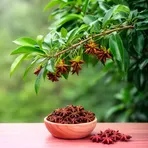
An evergreen tree or small bush with fragrant leaves and star-shaped fruit used as a spice
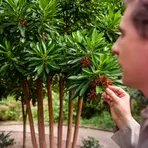
A group of evergreen trees with aromatic leaves like star anise
Surface Forms
Morphology
anise + tree
The phrase is a straightforward compositional noun phrase: 'anise' (a plant/spice) + 'tree' signals a tree associated with anise (i.e., a tree bearing or related to the anise plant), so a learner who knows both words can infer the meaning. Naming plants as X + tree is cross-linguistically common and follows regular composition, making the expression transparently interpretable by B1 learners.
Etymology
Anise tree may get its name from the strong, licorice-like smell of its seeds and leaves, so people compared the plant to the spice anise. That's why calling it an anise tree helps you remember that this small 'tree' is known for fragrant seeds used as a 'spice'.