
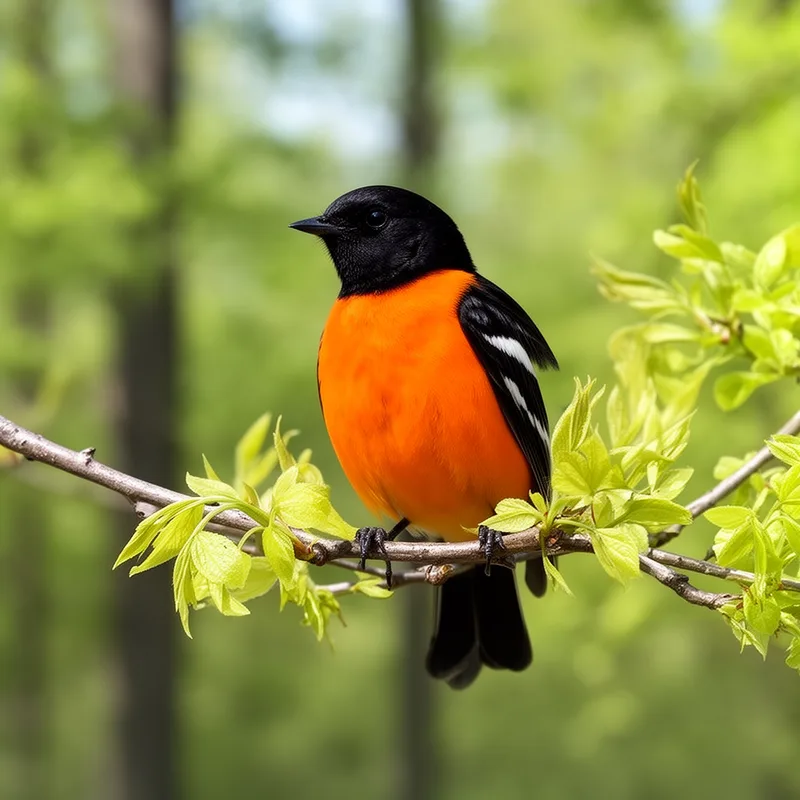
Icterus galbula galbula
- noun
- /ˈɪktərəs ˈɡælbuːlə ˈɡælbuːlə/
- Specialized
 :
Icterus galbula galbula
:
Icterus galbula galbula
- The bright orange and black plumage of the Icterus galbula galbula makes it easy to spot among spring foliage.
Examples
-
Unlike its western relatives, the Icterus galbula galbula prefers nesting in tall deciduous trees.
-
Birdwatchers in the eastern United States often hope to catch a glimpse of the Icterus galbula galbula during migration.
-
The Icterus galbula galbula is known for its vibrant yellow plumage.
-
Have you ever seen an Icterus galbula galbula in the wild?
-
Birdwatchers in the eastern United States often hope to catch a glimpse of the Icterus galbula galbula during migration.
-
The bright orange and black plumage of the Icterus galbula galbula makes it easy to spot among spring foliage.
-
Unlike its western relatives, the Icterus galbula galbula prefers nesting in tall deciduous trees.
Synonyms
A small bright songbird that makes a hanging nest
A small songbird with bright orange and black feathers found in eastern North America
A bright orange and black songbird found in the eastern United States
Surface Forms
Morphology
The components ('Icterus' and 'Galbula') name bird genera, so a learner who knows those words could infer the phrase refers to a type of bird; however the full trinomial is a technical taxonomic label indicating a specific subspecies (eastern subspecies of the northern oriole), which is not predictable from ordinary word composition. Because part of the meaning (that it is a bird) is transparent but the precise subspecies-level sense requires specialist knowledge of scientific naming conventions, this is only partially transparent to a B1 learner.
Etymology
Icterus galbula galbula may come from old words for 'yellow' birds. Icterus was a Greek word for yellow birds and galbula came from a Latin word for a small yellow bird, so the name points to this oriole's bright orange-yellow feathers.

