

Baltimore oriole
- noun
- /ˈbɔːltɪˌmɔːr ˈɔːri.oʊl/
- US
- I saw a Baltimore oriole in the park.
Examples
-
Many birdwatchers travel to see the stunning Baltimore oriole in its natural habitat each year.
-
We spotted a Baltimore oriole building its nest high in the maple tree.
-
The bright plumage of the Baltimore oriole makes it easy to identify during spring migrations.
-
Look at that Baltimore oriole perched on the branch!
-
I spotted a bright Baltimore oriole perched on a branch in the park.
-
The male Baltimore oriole is known for its striking orange and black feathers.
-
During migration, many birdwatchers look for the Baltimore oriole in the treetops.
Synonyms

 7
7.3
7
7.3

A bright bird with orange and black or yellow feathers that sings
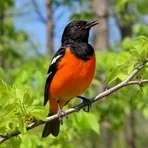
A small songbird with bright orange and black feathers found in eastern North America
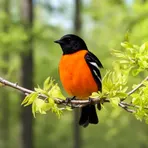
A small orange and black songbird found in eastern North America

A medium-sized bright orange and black songbird found in North America
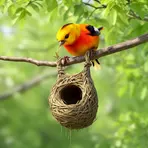
A small bright songbird that makes a hanging nest
Surface Forms
Morphology
The phrase combines the place-name 'Baltimore' with the noun 'oriole' (a type of songbird), so its meaning as a bird species associated with Baltimore is directly understandable from the parts. This toponymic naming pattern is common cross-linguistically, making the expression immediately comprehensible to learners who know both constituent words.
Etymology
Baltimore oriole was named because its orange and black feathers match the black-and-gold colors used by the old Lords of Baltimore. People called the bright oriole after Baltimore, so the name points to the bird and its colors.