
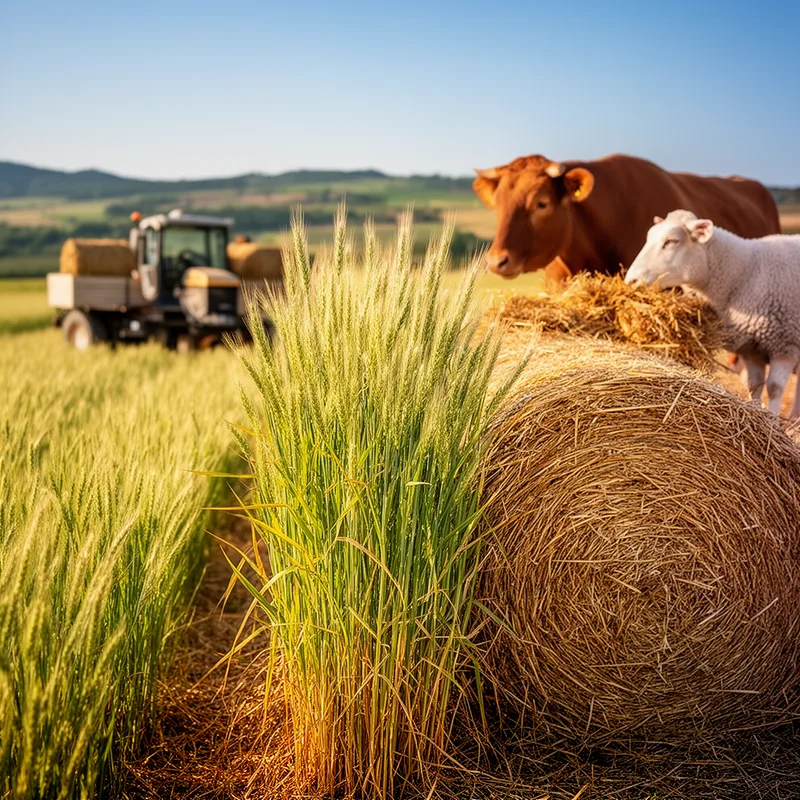
Hungarian grass
- noun
- Many farmers plant Hungarian grass because it tolerates dry conditions and grows quickly.
Examples
-
The bales of Hungarian grass made excellent feed for the livestock during winter.
-
Farmers often choose Hungarian grass for its drought resistance.
-
In some regions, Hungarian grass is an important crop for both hay and pasture.
-
The Hungarian grasses thrive in poor soil conditions.
-
In some regions, Hungarian grass is an important crop for both hay and pasture.
-
Many farmers plant Hungarian grass because it tolerates dry conditions and grows quickly.
-
The bales of Hungarian grass made excellent feed for the livestock during winter.
Synonyms
A rough grass grown each year for grain or animal feed that grows well in dry soil

A grass plant that tolerates drought and is grown for small seeds and animal feed

A rough grass that grows in dry places and is grown for grain and animal feed

A rough annual grass grown for edible seeds, animal feed, and wildlife food
How Drought-Resistant
 1
3.6
1
3.6


- Specialized
- US
1
6.9
Surface Forms
Morphology
The compound follows a straightforward adjective+noun pattern: 'Hungarian' specifies origin or association and 'grass' names the plant, so a B1 learner who knows both words will infer it denotes a type/variety of grass from Hungary. The technical details about drought resistance or agricultural use are specialized, but the core meaning is compositionally transparent and cross-linguistically common.
Etymology
Hungarian grass may come from the fact that people first saw or grew this tough plant in 'Hungary', so they joined Hungarian and grass to name it. That's why the name now means a rough, dry weather plant used for 'hay' and 'feed'.