

Hokkienese language
- noun
- She grew up in a family that uses both Mandarin and Hokkienese language at home.
Examples
-
Many people in Taiwan speak Hokkienese language in their daily lives.
-
The Hokkienese language has a rich vocabulary influenced by centuries of trade and migration.
-
The Hokkienese language is rich in history.
-
Is the Hokkienese language difficult to learn?
-
In many communities in Southeast Asia, the Hokkienese language is commonly spoken among families.
-
During the cultural festival, various performances showcased the Hokkienese language and its traditional songs.
-
The Hokkienese language is vital for preserving the cultural heritage of Chinese communities in Malaysia.
Synonyms

 1
7.9

A Chinese language spoken in Taiwan and parts of southern China


 1
9.9
A Chinese language spoken in Fujian province and by many overseas communities, also called Hokkien
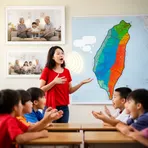
A Chinese language spoken mainly in Taiwan and Fujian, also called Hokkien or Minnan

A Chinese dialect spoken in Fujian province and by Chinese people abroad

A group of Chinese dialects that people speak in Fujian province, for example Hokkien

A form of Chinese people speak in Fujian province and nearby areas, also called Hokkien or Min Nan
Surface Forms
Morphology
Hokkienese + language
The phrase follows the transparent compositional pattern '[name/adjective] + language' where the meaning is simply 'the language of X'. If a learner knows the constituent 'Hokkienese' (the ethnonym/adjectival form referring to Hokkien people/varieties) and 'language', they can readily infer it denotes the Hokkien/Minnan language; this pattern is cross-linguistically common and predictable.
Etymology
Hokkienese language comes from the local word for the Chinese province 'Fujian', because people in that area said Hokkien for their home region and their speech became known as Hokkienese. That's why today Hokkienese language refers to the group of dialects spoken in 'Fujian' and by many overseas Chinese communities.