

Hadean eon
- noun
- /ˈheɪdiən ˈiːɒn/
- Specialized
- The Hadean eon lasted from the formation of Earth until around 4 billion years ago.
Examples
-
There is no direct geological evidence from the Hadean eon due to the lack of surviving rocks.
-
Scientists believe the Hadean eon was marked by intense volcanic activity and a molten surface.
-
The formation of the Moon is thought to have occurred during the Hadean eon.
-
The Hadean eon is a crucial period in Earth's history.
-
Scientists study the Hadean eon to understand planetary formation.
-
During the Hadean eon, the Earth experienced extreme temperatures and frequent asteroid impacts.
-
Many scientists focus on the Hadean eon to gain insights into the early conditions that shaped our planet.
Synonyms

The earliest time in Earth's history from about 4.6 to 4 billion years ago before rocks or life
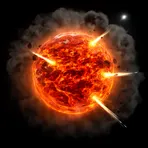
The very earliest time on Earth after it formed, before rocks or life existed

A very early time on Earth from its formation until about 3,800 million years ago with no signs of life

A very early time in Earth's history when the planet formed and no life existed
Surface Forms
Morphology
The phrase is fully compositional: 'Hadean' specifies a named time interval and 'eon' denotes a long geological time unit, so together they denote the eon called Hadean (the earliest eon). Although the term is specialized, a B1 learner who knows both constituent meanings can transparently infer the MWE's meaning.
Etymology
Hadean eon gets its name from Hades, the Greek underworld, because the young Earth looked so hot and violent that it reminded people of a kind of 'hell'. That's why Hadean eon now means the very first, fiery time in Earth's history when the surface was melted and there was no life yet.

