

Priscoan eon
- noun
- Specialized
- The Priscoan eon represents the earliest phase of Earth's history, lasting from its formation to 3.8 billion years ago.
Examples
-
During the Priscoan eon, the planet's surface was still forming and cooling.
-
The Priscoan eon marks the very beginning of the Earth's geological record.
-
No rocks have been found that date back to the Priscoan eon, making it largely a theoretical time span.
-
The Priscoan eon marks the beginning of Earth's geological history.
-
During the Priscoan eon, the Earth was still forming.
-
Scientists study geological evidence from the Priscoan eon to understand the planet's early development.
-
Few details are known about the Priscoan eon since it predates any form of life on Earth.
Synonyms
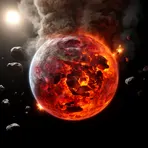
A very early time in Earth's history when the planet formed and no life existed
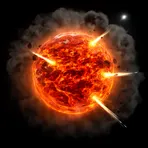
The very earliest time on Earth after it formed, before rocks or life existed
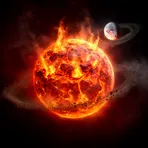
The first time after Earth formed, about 4.6 to 4 billion years ago, before rocks or life
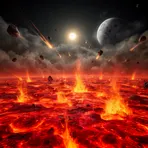
The earliest time in Earth's history from about 4.6 to 4 billion years ago before rocks or life
Surface Forms
Morphology
This is a straightforward adjective + noun composition: 'Priscoan' (denoting the very earliest/primitive) modifies 'eon' (a long geological time period). If a learner knows both constituent meanings, the combined meaning 'the earliest eon in Earth's history' is directly derivable, so the expression is compositionally transparent despite its technical nature.
Etymology
Priscoan eon comes from the part Priscoan, a word meaning 'very ancient', and eon, meaning 'a very long time'. It names the Earth's very first age when the planet was still forming and there was no life, so the phrase means the earliest, lifeless period in Earth's history.

