
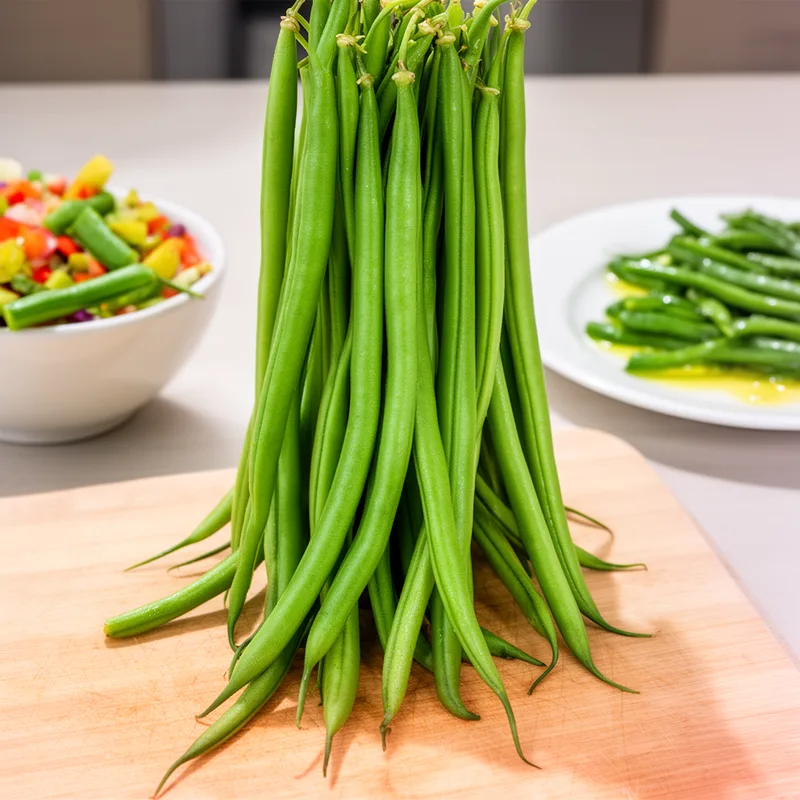
French bean


 1
2.1
1
2.1
- noun
- /frɛntʃ biːn/
- UK
- We enjoyed a fresh salad with tender French beans from the local market.
- slender French beans
Examples
-
Potatoes, tomatoes, chocolate, vanilla, squash, lima beans, French beans, peanuts, red and green peppers, among other plants, all managed in time to achieve popular acceptance.
Academic text (1992) -
They got the best French beans here.
-
We've got sweet corn, French beans, broccoli, runner beans.
-
For dinner, she sautéed French beans with garlic and olive oil.
-
He added chopped French beans to the stir-fry for extra crunch.
Synonyms
 2
7.9
2
7.9
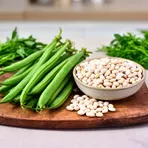
A bean often eaten as a green bean or a small dried bean
 1
9.2
1
9.2
A thin small green bean often served in French food
 1
2.7
1
2.7
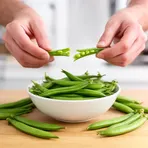
A tender green bean you eat young that breaks easily and has no strings
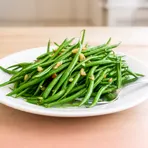
Thin green beans often served cooked as a vegetable
How Thin

Surface Forms
Morphology
The sense 'a variety of bean associated with France or French cuisine' is directly derivable from combining 'French' (relating to France/style) with 'bean' (an edible pod/seed); it denotes a type or variety and follows ordinary adjective + noun composition. This is a common, cross-linguistic naming pattern for food items, so a B1 learner who knows both words would readily understand the MWE.
Etymology
French bean comes from French cooks and gardeners who grew and used a long, slim green bean they called 'haricot vert'. English speakers liked the French name and began to call the same vegetable French beans. So French shows the link to France and bean is the vegetable, and today the phrase means the long, thin green pod people eat.