
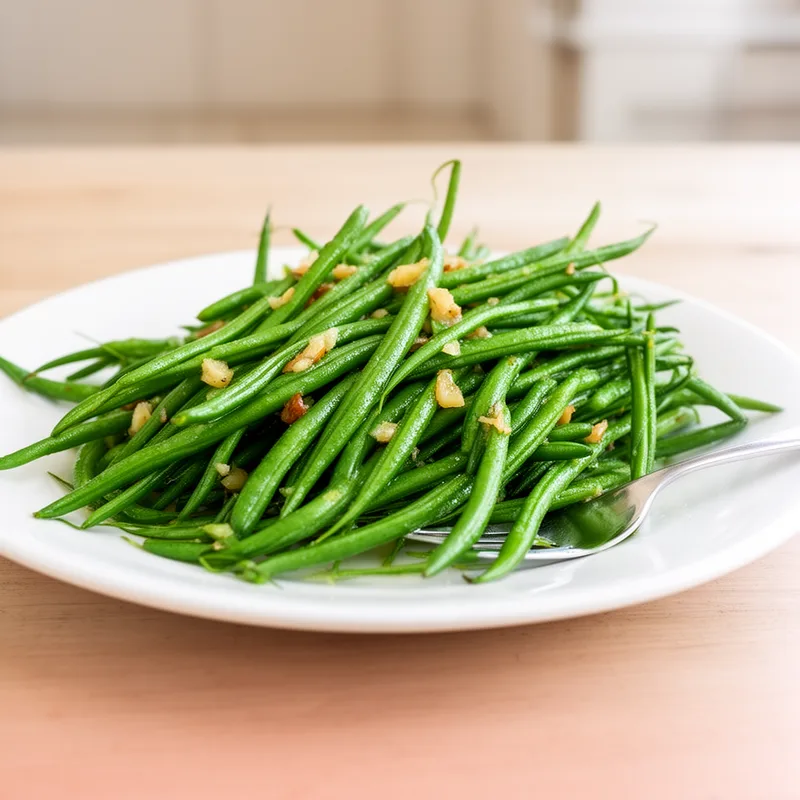
haricots verts
- noun
- /ˌɛrɪˈkoʊ vɛr/
 :
judías verdes
:
judías verdes
- To prepare the dish, first, sauté the haricots verts until they are crisp-tender.
- haricots verts (tiny green beans)
- haricots verts (tiny green)
- haricots verts (tiny)
Examples
-
For a vibrant side dish, steam the haricots verts and toss them with olive oil and lemon.
-
The chef prepared a dish with haricots verts and chicken.
-
At the market, I found fresh haricots verts perfect for tonight's dinner.
-
She prepared a side of haricots verts sautéed with garlic and butter.
-
The restaurant serves haricots verts instead of regular green beans for a more delicate taste.
-
I love to eat haricots verts with my dinner.
-
Add the haricots verts to the salad for a fresh and crunchy texture.
Synonyms

 1
9.2
1
9.2

A thin small green bean often served in French food

 1
2.1
1
2.1
A long thin green vegetable that people eat cooked or raw
How Thin

Surface Forms
Morphology
haricot + verts
The noun + adjective composition is fully compositional: haricot = bean and verts = green, so the phrase literally denotes green (slender) beans. Although it is a French loan, the meaning is directly derivable from the constituents and follows a simple color + object logic that is cross-linguistically transparent; a learner who knows both words would readily infer the referent (even if they might miss culinary nuance).
Etymology
Haricots verts is a French name that means haricots 'beans' and verts 'green'. French cooks often chose thin, young beans as a special side dish, so today haricots verts refers to those thin, tender green beans.