

European bean
- noun
- UK
- Farmers cultivate the European bean for both its seeds and to feed their livestock.
Examples
-
The European bean thrives in the temperate climates of Northern Europe.
-
Dishes featuring European bean are popular in Mediterranean cuisine.
-
The European bean thrives in sunny conditions.
-
Farmers often grow European beans for their seeds.
-
Farmers cultivate the European bean for its nutritious seeds and as fodder for animals.
-
Dishes featuring European bean seeds are common in various Mediterranean recipes.
-
The European bean is an important crop in Europe, valued for both food and animal feed.
Synonyms
 6
4.6
6
4.6

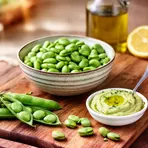
A type of broad bean used in Mediterranean cooking

A plant from Europe and Asia that makes large flat beans people and animals eat

An upright plant grown for its large flat edible seeds and food for animals

A garden plant grown for its large flat beans that people or animals eat
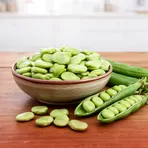
A large flat bean that people cook and eat, also called fava

A tall plant grown for large flat seeds eaten by people and fed to animals

A type of broad bean grown to feed animals
How Edible

Surface Forms
Morphology
The phrase is a straightforward adjective + noun composition: 'European' (from Europe) + 'bean' (an edible seed/plant), so its meaning as a bean associated with Europe is directly derivable from the parts. This compositional pattern is common across languages and follows standard adjective-noun semantics, so a B1 learner who knows both words will readily understand the MWE.
Etymology
European bean is named from farmers in Europe who grew a tall plant with big, flat seeds. They called it the bean from Europe because people used the plant for food and to feed animals, so today the name means 'an upright plant grown mainly for its large, flat edible seeds and also used as animal feed'.