

Euproctis
- noun
- Specialized
- The caterpillars of Euproctis species are known to cause skin irritation in humans.
Examples
-
Several Euproctis moths have become significant pests in agriculture and forestry.
-
The Euproctis moth is known for its distinctive tufts of hair.
-
Researchers are studying the distribution of Euproctis throughout temperate and tropical regions.
-
Have you ever seen a Euproctis in the wild?
-
Researchers are studying the distribution of Euproctis moths throughout temperate and tropical regions.
-
Several species of Euproctis moths have become significant pests in agriculture and forestry.
-
The caterpillars of Euproctis are known to cause skin irritation in humans.
Synonyms
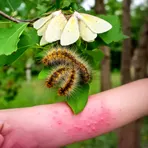
A group of moths whose caterpillars often have stinging hairs

A dull colored moth whose caterpillars have tufts of hair and eat leaves of many trees
Compounds

- Specialized
A small white moth with a furry body and a yellow tail tuft that can cause skin irritation

- Specialized
A small brown and white moth whose caterpillars damage fruit and shade trees
Surface Forms
Etymology
Euproctis comes from Greek parts eu- meaning 'good' and proct- meaning 'rear' or 'tail'. Scientists probably named these moths for a noticeable tail or small bunch of hairs at the rear, so the name helps you remember this group by their back end.

