
Euproctis chrysorrhoea
- noun
- Specialized
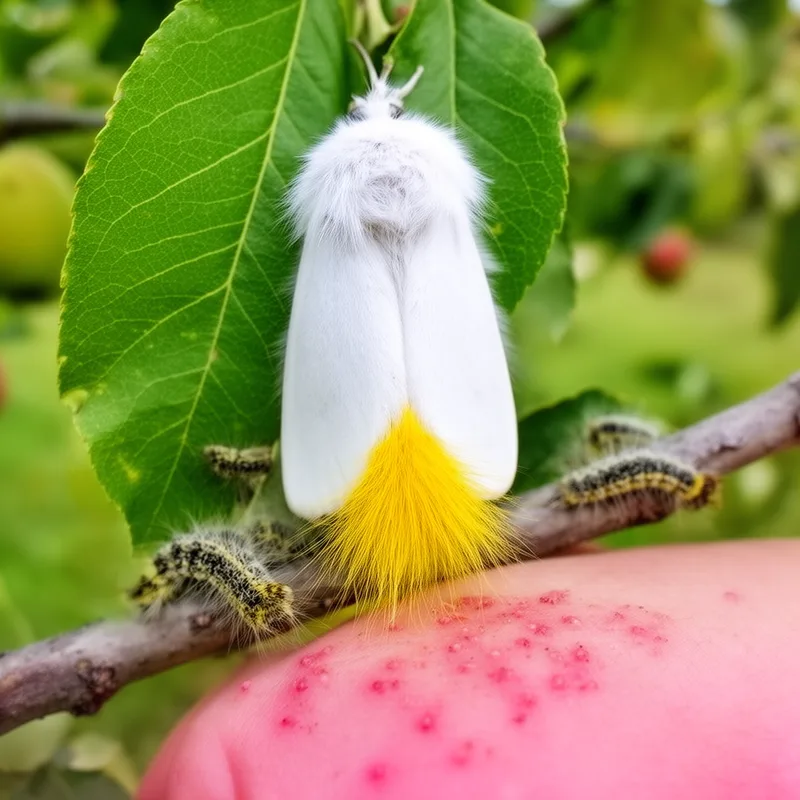
- The distinctive yellow tail tuft makes Euproctis chrysorrhoea easy to recognize among European moths.
Examples
-
The caterpillars of the Euproctis chrysorrhoea can cause skin irritation when touched.
-
Gardeners often try to control Euproctis chrysorrhoea to prevent damage to fruit trees.
-
The Euproctis chrysorrhoea is often found in gardens.
-
Have you seen a Euproctis chrysorrhoea before?
-
Gardeners often try to control Euproctis chrysorrhoea to prevent damage to fruit trees.
-
The caterpillars of the Euproctis chrysorrhoea can cause skin irritation when touched.
-
The distinctive yellow tail tuft makes Euproctis chrysorrhoea easy to recognize among European moths.
Synonyms

A small flying insect with a white furry body and a yellow tuft at the tail

A small brown and white moth that eats leaves and damages fruit and shade trees

A small brown and white moth whose caterpillars eat the leaves of fruit and shade trees
Surface Forms
Morphology
Euproctis + chrysorrhoea
This is a Linnaean Latin binomial (a scientific species name) whose referent ('brown-tail moth') is not compositionally predictable from the listed constituents. The second element 'chrysorrhoea' is not an ordinary English word (and even if analysed into classical roots, those roots are not accessible to a B1 learner), so the overall meaning would be opaque to learners who only know the constituent forms.
Etymology
Euproctis chrysorrhoea may come from old Greek words: Euproctis meaning 'good tail' and chrysorrhoea meaning 'golden flow', a picture of the small yellow tuft at the moth's tail. That's why the name fits this white, furry European moth known for its yellow tail tuft.

