
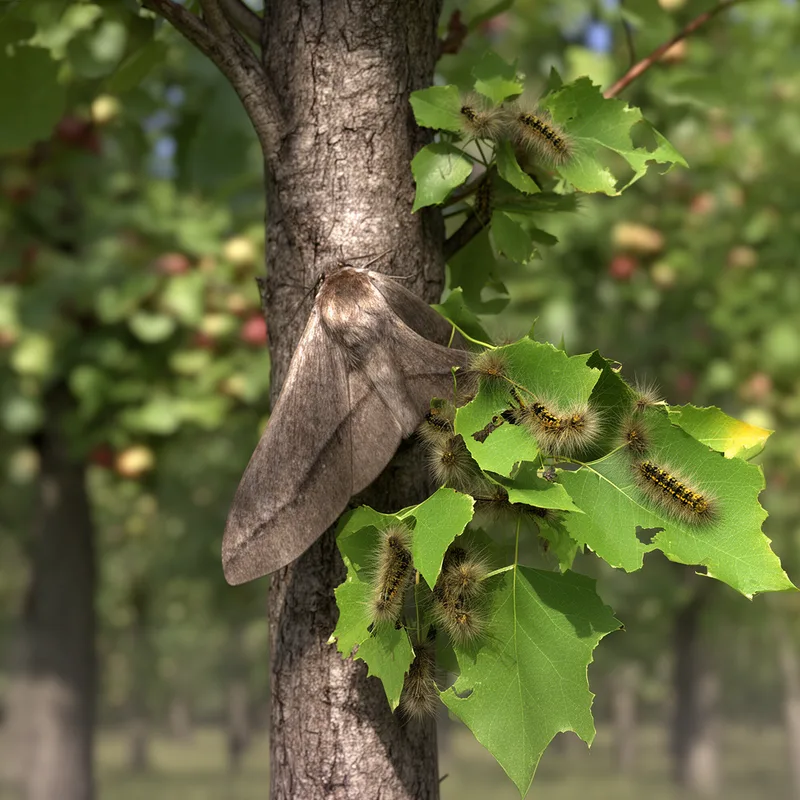
tussock moth
- noun
- /ˈtʌsək mɔθ/
- Specialized
- The tussock moth larvae can be found feeding on the leaves of oak and maple trees.
Examples
-
...what distinguishes Thaumetopoea pityocampa from other Tussock moths is the communal nature of their larvae.
-
Tussock moth larvae that are not killed by parasitic wasps and predators turn into brightly marked caterpillars.
Academic text (2002) -
Many gardeners consider the tussock moth a pest due to its larvae damaging plants.
-
The adult tussock moth has a dull color that helps it blend in with tree bark.
Synonyms
A moth with hairy caterpillars that eat the leaves of many trees
Surface Forms
Morphology
The compound combines 'tussock' (a tuft) + 'moth' (an insect), so a learner who knows both constituents can infer it refers to a moth characterized by tufts of hair or associated with tussocks. Although detailed biological facts about the larvae are not derivable, the core referential meaning is compositionally predictable and follows a standard noun–noun modifier pattern.
Etymology
Tussock moth comes from tussock, a word for a little clump or 'tuft', and moth, because the caterpillars have hairy tufts on their backs that look like small clumps. That's why the name points to these moths and helps people spot their caterpillars.

