
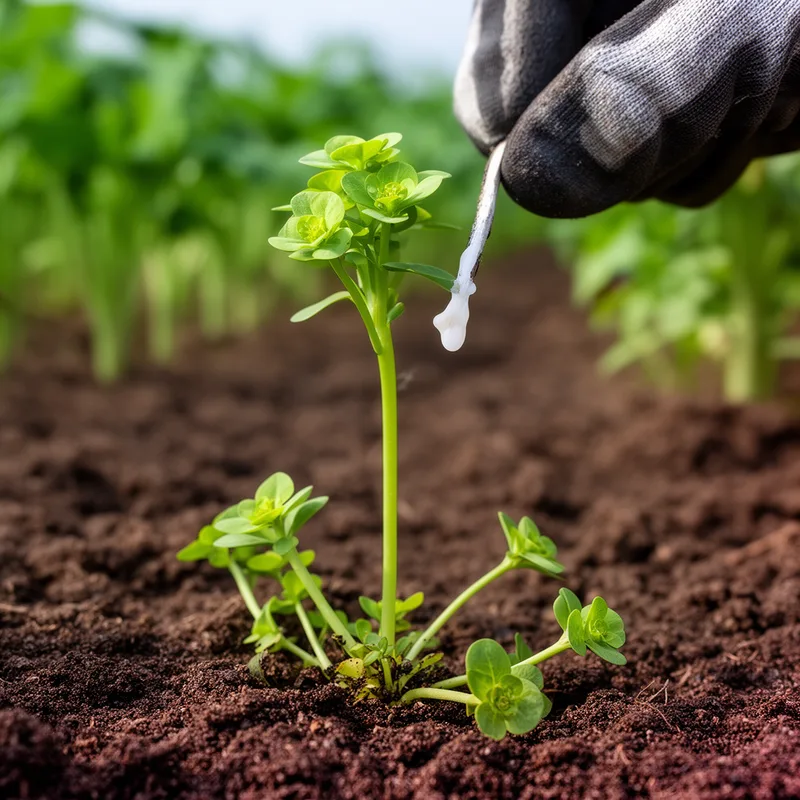
Euphorbia peplus
- noun
- /juˈfɔrbiə ˈpɛpləs/
- Specialized
 :
Euphorbia peplus
:
Euphorbia peplus
- Gardeners are often troubled by Euphorbia peplus invading their flower beds.
Examples
-
Despite its weedy habit, Euphorbia peplus has been researched for potential medicinal uses.
-
Euphorbia peplus can quickly colonize disturbed ground in gardens and fields.
-
Look at this Euphorbia peplus!
-
This is a Euphorbia peplus.
-
Euphorbia peplus is commonly found as a weed in many gardens across the eastern United States.
-
In the wild, Euphorbia peplus often overtakes native plants and disrupts local ecosystems.
-
Many gardeners struggle to keep Euphorbia peplus from spreading in their vegetable patches.
Synonyms

A small plant that lives for one year and often grows as a garden weed
Surface Forms
Morphology
Euphorbia + peplus
The phrase combines a botanical genus name ('Euphorbia' — a plant/spurge) with a Latin species epithet ('peplus') that is not a lexical English word. A B1 learner who knows 'Euphorbia' can infer this refers to a particular species of that plant (partial compositionality), but they cannot derive any species-specific meaning from 'peplus', so the relation is only partially transparent.
Etymology
Euphorbia peplus may get its name from an ancient doctor named Euphorbus who used plants like this as medicine. The second part, peplus, likely comes from the Greek word 'peplos' meaning 'robe', a simple picture for its small, layered leaves. So the name gives an easy image: a little medicinal weed with robe-like leaves that gardeners often find.

