
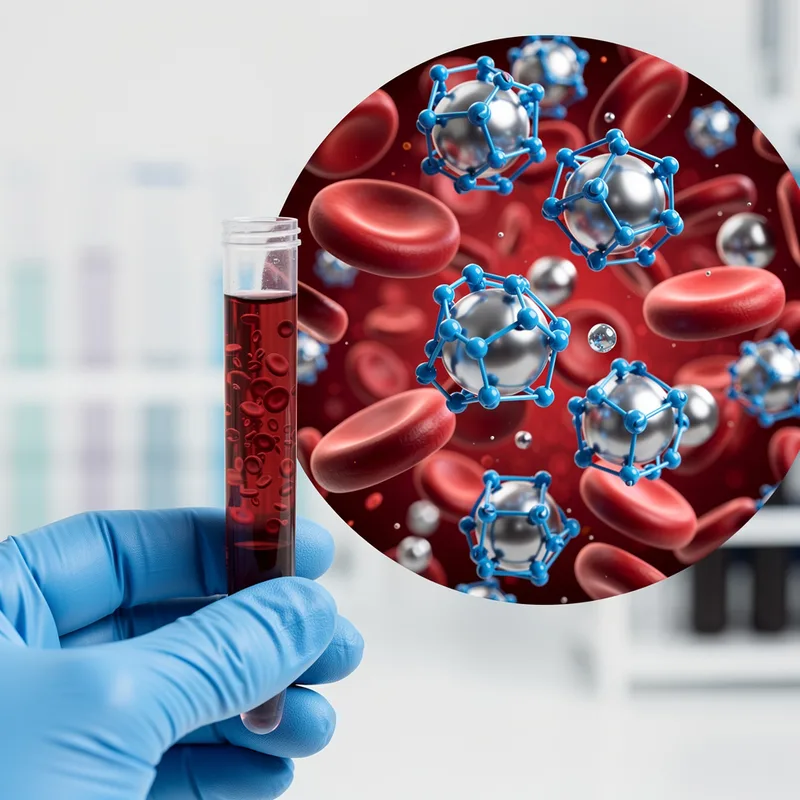
EDTA
 4
7.5

- noun
- /ˌiː diː tiː ˈeɪ/
- Specialized
- Lipid fractions were analyzed in EDTA-treated plasma.
- EDTA tubes
- EDTA blood
- EDTA anticoagulant
Examples
-
The doctor used EDTA to help remove heavy metal toxins from the patient's system.
-
The vials are filled with an anti-coagulant called EDTA.
-
If necessary, decalcification by 10% EDTA was performed for one day.
Academic text (2018) -
But after EDTA was administered, the sinusitis resolved in a number of cases for six months or more.
Academic text (2002) -
That's why EDTA is a fine anticoagulant for blood.
Fiction book (1998) -
Morning venous blood samples were collected for the study of various parameters and taken in EDTA containers.
Academic text (2007) -
EDTA increases the permeability of bacterial cells and allows antibiotics to penetrate them.
Academic text (2002) -
All blood samples were collected into 7 ml tubes containing EDTA (anticoagulant and chelating agent).
Academic text (2006) -
A venous blood sample collected into EDTA was taken for measurement of IgG against CHIKV, DENV, and RVFV.
Academic text (2012) -
At 80% confluence, cell harvesting was carried out using 0.25% (w/v) trypsin-EDTA (Gibco), followed by centrifugation at 300g for 5 minutes.
Academic text (2018)
Synonyms
 1
7.2
A chemical that sticks to metals to remove them from liquids or the body
A medicine that binds and removes harmful metals like lead from the body
Surface Forms
Etymology
EDTA comes from the long chemical name ethylenediaminetetraacetic acid, and it is made of parts like diamine ('two amine groups') and tetraacetic ('four acetic groups') that describe the chemical's parts. These parts let the chemical 'grab' or bind metal ions, so EDTA is named for how it holds and removes metals from solutions or the blood.