

Czar Alexander I


 1
8.9
- proper noun
- /zɑr ˌælɪɡˈzændər aɪ/
- Many history books detail how Czar Alexander I played a pivotal role in defeating Napoleon.
Examples
-
Czar Alexander I introduced several reforms in Russia, although many remained unfulfilled.
-
The Congress of Vienna in 1815 was greatly influenced by Czar Alexander I and his policies.
-
Did Czar Alexander I really defeat Napoleon?
-
Under Czar Alexander I, Russia underwent significant reforms.
-
Czar Alexander I played a key role in the defeat of Napoleon at the Battle of Borodino.
-
Many reforms were initiated by Czar Alexander I, aimed at modernizing the Russian Empire.
-
The legacy of Czar Alexander I includes his efforts to promote peace in Europe after the Napoleonic Wars.
Synonyms
 1
7.5
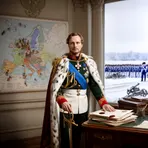
Emperor of Russia from 1801 to 1825 who led Russia against Napoleon and introduced early reforms
 1
8.6
A Russian emperor from 1801 to 1825 who tried to make changes and helped defeat Napoleon
Surface Forms
Morphology
This is a referential name formed compositionally: 'czar' (Russian emperor) + 'Alexander' (personal name) + 'I' (the first/regnal numeral). A B1 learner who knows these constituents can infer it denotes the first czar called Alexander (a specific historical ruler), and naming conventions with ordinals are cross-linguistically common. The phrase is therefore transparent even though detailed historical facts (dates, deeds) are not derivable from the words alone.
Etymology
Czar Alexander I was the Russian emperor from 1801 to 1825; picture him in a grand palace trying to change old laws and sitting with other leaders to stop Napoleon. So the name means 'the emperor of Russia who tried reforms and helped defeat Napoleon'.