
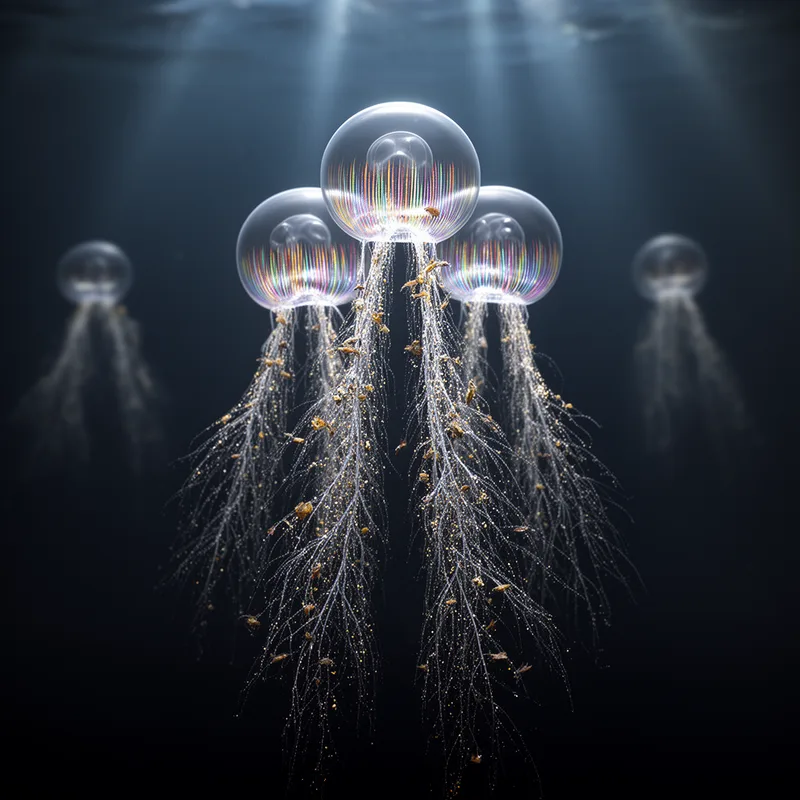
Cydippidea
- noun
- Specialized
- The Cydippidea are notable for their transparent, globular bodies and two long, branching tentacles.
Examples
-
Unlike other ctenophores, Cydippidea typically use their tentacles to capture prey in the water column.
-
Researchers discovered several new species belonging to the order Cydippidea in the deep ocean.
-
The Cydippidea are fascinating marine creatures.
-
Can you identify Cydippidea in the ocean?
-
Researchers discovered several new species belonging to the order Cydippidea in the deep ocean.
-
The Cydippidea are notable for their transparent, globular bodies and two long, branching tentacles.
-
Unlike other ctenophores, Cydippidea typically use their tentacles to capture prey in the water column.
Synonyms
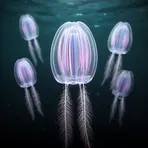
A group of sea animals called comb jellies that have two long feather-like tentacles
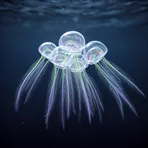
A group of comb jellies with two long feather-like tentacles
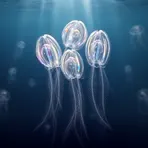
A group of comb jellies with two long feather-like tentacles
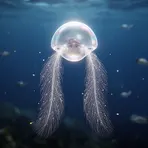
A small sea animal like a jellyfish with two long, feathery tentacles
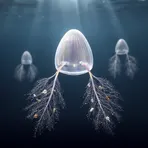
Sea animals that look like jellyfish and have two long branched tentacles to catch food
Compounds
Surface Forms
Etymology
Cydippidea is named after the genus Cydippe, a name from ancient Greek, and it labels a group of comb jellies that usually have two long, feathery or branching tentacles. So, thinking of those two long tentacles helps you remember what Cydippidea refers to.

