
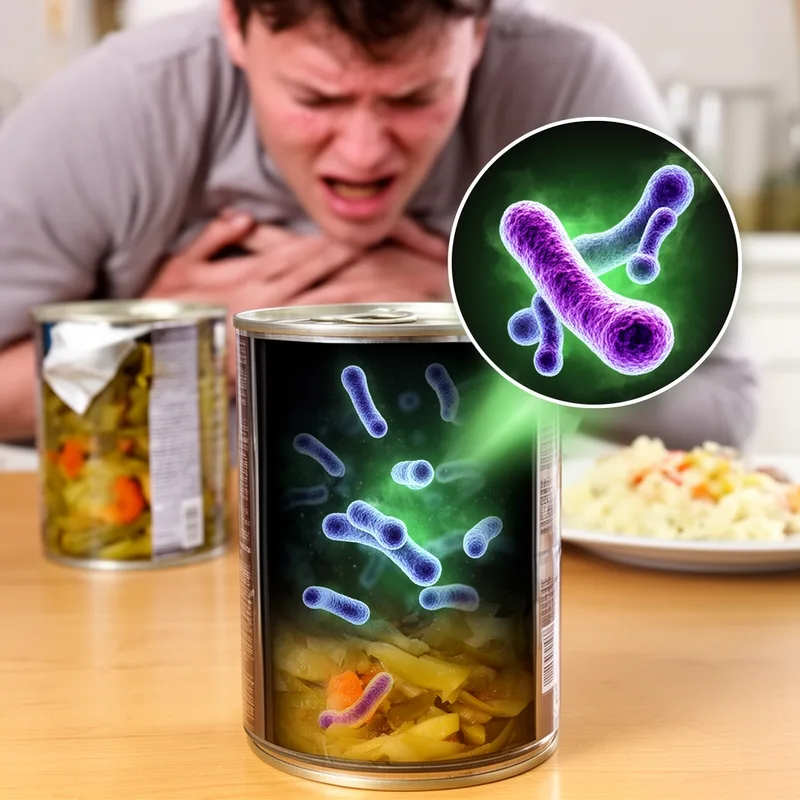
Clostridium botulinum
- noun
- /klɒsˈtrɪdiəm ˌbɒtʃʊˈlaɪnəm/
- Specialized
- Proper sterilization techniques are necessary to prevent Clostridium botulinum contamination in the food industry.
Examples
-
Clostridium botulinum spores can survive in improperly canned foods, leading to dangerous foodborne illness.
-
The bacterium Clostridium botulinum is often found in improperly canned foods.
-
Scientists study Clostridium botulinum to better understand how its toxin affects the nervous system.
-
Did you know that Clostridium botulinum can cause severe food poisoning?
-
The bacterium Clostridium botulinum can be found in improperly canned foods, where it can produce toxins harmful to humans.
-
Infections from Clostridium botulinum often result from consuming contaminated foods or water.
-
The neurotoxin produced by Clostridium botulinum is one of the most lethal substances known to science.
Synonyms
 4
9.9
4
9.9

A kind of bacteria that makes a very strong poison causing serious food poisoning
A germ that grows without air and makes a poison that causes serious food poisoning
Surface Forms
Morphology
This is a standard scientific binomial formed from a genus name ('Clostridium') and a species epithet ('botulinum'); if a learner knows that 'Clostridium' denotes a bacterial genus and 'botulinum' denotes the toxin-producing species, the combined name transparently refers to that specific bacterium that produces botulin. Binomial nomenclature is a regular compositional pattern (genus + species) and does not rely on idiomatic or metaphorical meaning, so the sense is directly derivable from the parts.
Etymology
Clostridium botulinum gets its name from two old words: Clostridium refers to a long, narrow shape, and botulinum comes from Latin for 'sausage' because early poisonings were linked to bad sausages. That's why the name is linked to a tiny bacterium that makes a powerful 'toxin' and can cause serious 'food poisoning'.