
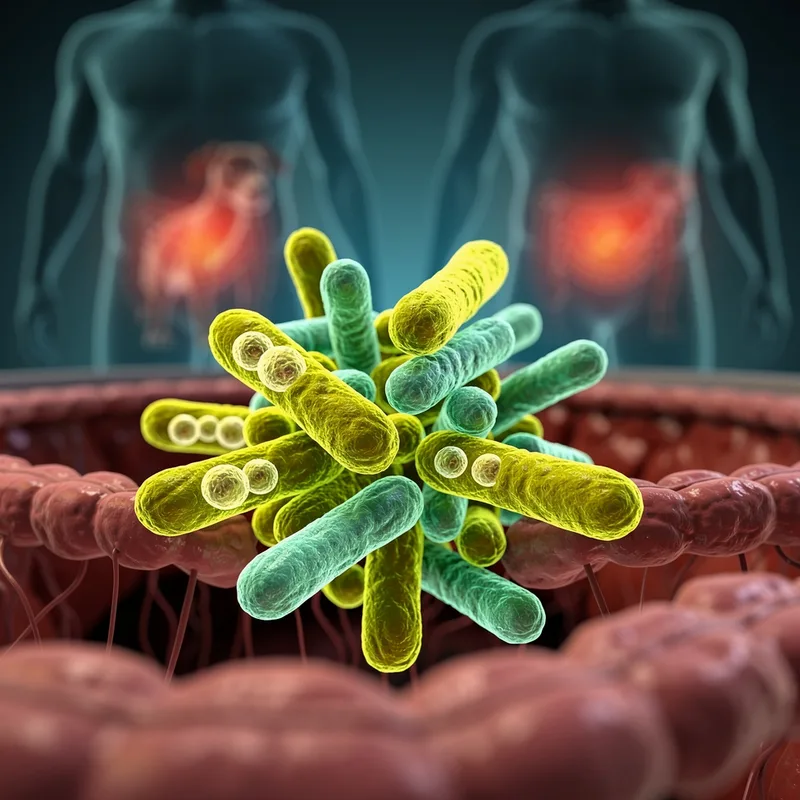
clostridium
 1
9.9
1
9.9

- noun
- /klɒsˈtrɪdiəm/
- Specialized
- Stool studies did not reveal cryptosporidia, Clostridium difficile, Vibrio cholera, acid-fast bacteria, or other parasites.
- Clostridium difficile
- Clostridium perfringens
- Clostridium botulinum
Loading YouTube…
Watch on YouTubeIt is the number one treatment for a couple of conditions, mainly really bad infections and something called recurrent C diff, Clostridium difficile.
- It is the number one treatment for a couple of conditions, mainly really bad infections and something called recurrent C diff, Clostridium difficile.
Examples
-
Approximately 10% of those with these complaints develop pseudomembranous colitis, which is caused by enterotoxin-producing Clostridium difficile.
Academic text (1995) -
Recent reports suggest that the incidence and severity of Clostridium difficile colitis are increasing in North America.
Academic text (2007) -
Testing for pathogenic Clostridium required a week's incubation.
Fiction book (2000) -
Also, another important thing to know is that omeprazole has been linked to an increased rate of Clostridium difficile diarrhea infections.
-
Furthermore, use of acid-suppressive agents, particularly PPIs, has been associated with an increased risk of community-acquired Clostridium difficile infection.
Academic text (2010) -
Antibiotic stewardship is the responsibility of all providers, and the potential for antibiotic resistance and Clostridium difficile infection should always be considered.
Academic text (2014) -
Importance of antibiotic class to the development of Clostridium difficile infection (CDI) in adults: A systematic review.
Blog text (30) -
Common pathogens are Bacillus, coagulase-negative Staphylococcus, Clostridium perfringens, Escherichia coli, and Aspergillus.
Academic text (1996) -
Section 3-501.19 contains a position paper that further explores the risks of Listeria monocytogenes, Clostridium perfringens, and Bacillus cereus in potentially hazardous ready-to-eat foods.
Academic text (2008) -
The clostridium botulinum can produce a toxin that leads to food poisoning.
Synonyms

A group of rod-shaped bacteria that live with little oxygen and often in soil or animal intestines
Compounds

- Specialized
A bacterium that grows without oxygen and makes a poison causing severe food poisoning


- Specialized
A type of bacteria that can cause food poisoning and serious wound infections
- Specialized
A strong poison made by bacteria that causes severe stomach cramps and diarrhea after people eat contaminated food
- Specialized
A group of rod-shaped bacteria that live with little oxygen and often in soil or animal intestines
Surface Forms
Etymology
Clostridium comes from a Greek word kloster meaning 'spindle', the tool used for spinning thread, because the bacteria look long and round like small spindles. So clostridium is the name for a group of long, rod-shaped bacteria, some of which can cause disease.