
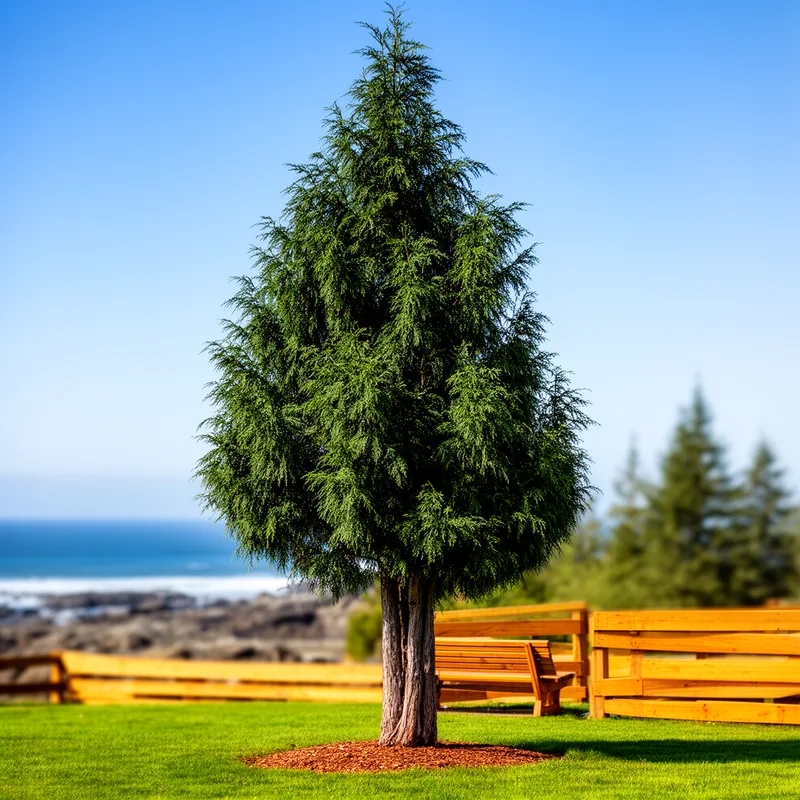
Chamaecyparis nootkatensis
- noun
- /ˌkæməˈsaɪpərɪs nuːtˈkætənˌsɪs/
- Specialized
- Many parks in the region feature mature Chamaecyparis nootkatensis as ornamental trees.
Examples
-
The Chamaecyparis nootkatensis is prized for its durability and resistance to decay in coastal gardens.
-
Carpenters often use wood from the Chamaecyparis nootkatensis for specialty woodworking and outdoor furniture.
-
The Chamaecyparis nootkatensis is a stunning addition to any garden.
-
Many landscapers prefer Chamaecyparis nootkatensis for its beauty.
-
In many coastal gardens, you can find the Chamaecyparis nootkatensis planted as a beautiful ornamental tree.
-
The wood of the Chamaecyparis nootkatensis is often used in crafting durable outdoor furniture.
-
Landscapers love to incorporate Chamaecyparis nootkatensis into their designs for its tall and elegant appearance.
Synonyms
 15
5.3
15
5.3

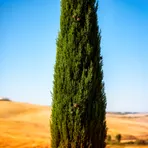
A tall evergreen tree with dark, flat leaves and small round cones
 3
3.5
3
3.5
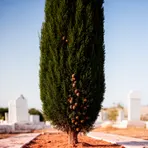
A tall evergreen tree with dark, flat leaves and small round cones
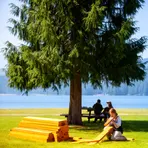
A tall evergreen tree from the Pacific coast grown for shade and for its long-lasting, fragrant wood
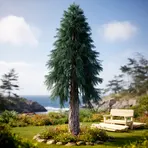
A tall evergreen tree from the Pacific coast of North America often grown in gardens
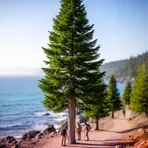
A tall coastal tree called Alaska cedar that keeps green leaves all year and is often planted for decoration

A tall evergreen tree from the Pacific coast of North America often grown in gardens and liked for its wood
Surface Forms
Morphology
Chamaecyparis + nootkatensis
Knowing 'Chamaecyparis' (a type of cypress tree) allows a learner to infer that the phrase names a kind of tree, but the specific epithet 'nootkatensis' is a Latinized, toponymic/technical term that is not transparently meaningful to a B1 learner. Botanical binomials are compositionally genus + species, so the construction signals a species of Chamaecyparis, but the exact sense (native to the Pacific coast / Nootka origin) is not derivable without specialist knowledge.
Etymology
Chamaecyparis nootkatensis gets its name from two parts: Chamaecyparis (a word for a cypress-like plant) and nootkatensis meaning 'from Nootka', a place in Alaska. So the name is an easy memory hook: it tells you this is a cypress-like evergreen from Nootka, which fits the tree's coastal origin and its use for durable ornamental wood.