

Alaska cedar
- noun
- /əˈlæskə ˈsiːdər/
- US
- Many gardeners choose to plant Alaska cedars in their landscapes.
Examples
-
They studied the unique adaptation of the Alaska cedar to coastal climates.
-
The Alaska cedar is prized for its durable, fragrant wood.
-
Several Alaska cedar trees were planted around the park for shade and beauty.
-
The Alaska cedar is known for its beautiful, aromatic wood.
-
Several Alaska cedar trees provide shade and enhance the beauty of the park.
-
The Alaska cedar is commonly grown in gardens for its striking appearance.
-
Many homeowners appreciate the Alaska cedar for its ornamental value in their yards.
Synonyms
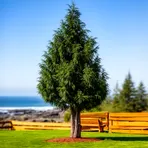
A tall evergreen tree from the Pacific coast of North America often planted for its wood and beauty
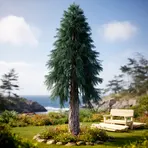
A tall evergreen tree from the Pacific coast of North America often grown in gardens
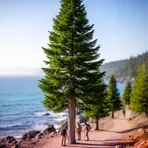
A tall coastal tree called Alaska cedar that keeps green leaves all year and is often planted for decoration

A tall evergreen tree from the Pacific coast of North America often grown in gardens and liked for its wood
Surface Forms
Morphology
The meaning 'a type of cedar associated with Alaska' is directly and compositionally derived from 'Alaska' (place) + 'cedar' (tree species). This place-name + noun pattern is cross-linguistically common and follows regular English noun phrase formation, so a B1 learner who knows both words would readily infer the MWE's meaning.
Etymology
Alaska cedar gets its name from where it grows and how it smells: the tree is common on the coast of Alaska and its wood looks and smells like a true cedar. So calling it Alaska cedar gives a clear image of a tall, fragrant 'tree' from Alaska used for decoration and strong wood.

