

cypress tree
 3
3.5
3
3.5

- noun
- /ˈsaɪprəs tri/
- Between the cypress trees and the water, I could see big boats.
Examples
-
The cypress trees in the center of the dome usually remain unscathed.
Academic text (1991) -
At the base camp, the National Park Service had planted a half-dozen cypress trees.
Academic text (1991) -
What do you think a cypress tree looks like?
Academic text (1992) -
In a boat tied up to a cypress tree.
-
"Come, let's go to the cypress trees," she said.
Fiction book (1996) -
He has a boat under a cypress tree.
-
Outside the window of our car, the cypress trees heavy with gray moss slipped by.
Fiction book (1993) -
Now that the river's so low, you can see some of the oldest cypress trees in Louisiana.
Fiction book (2002) -
In the front yard stood two cypress trees she said were as old as Apalachicola itself.
Fiction book (2001) -
The wind whistled through the cypress tree and swayed the Spanish moss.
Synonyms
 15
5.3
15
5.3
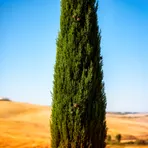
A tall evergreen tree with dark, flat leaves and small round cones

A group of evergreen trees like cypress that keep their leaves all year
Surface Forms
Morphology
The meaning 'an evergreen conifer of the genus Cupressus' is directly derivable from combining 'cypress' (a temperate evergreen conifer) with 'tree' (a tall perennial plant). This noun-noun compound follows regular compositional naming patterns (botanical/type + object) that are cross-linguistically common, so a B1 learner who knows both constituents will readily understand the phrase.
Etymology
Cypress tree has a strong image from ancient times: people planted cypress trees near graves and used their hard wood for coffins. Because of that, the cypress tree became linked with 'death' and 'mourning', and we still see them near cemeteries today.