
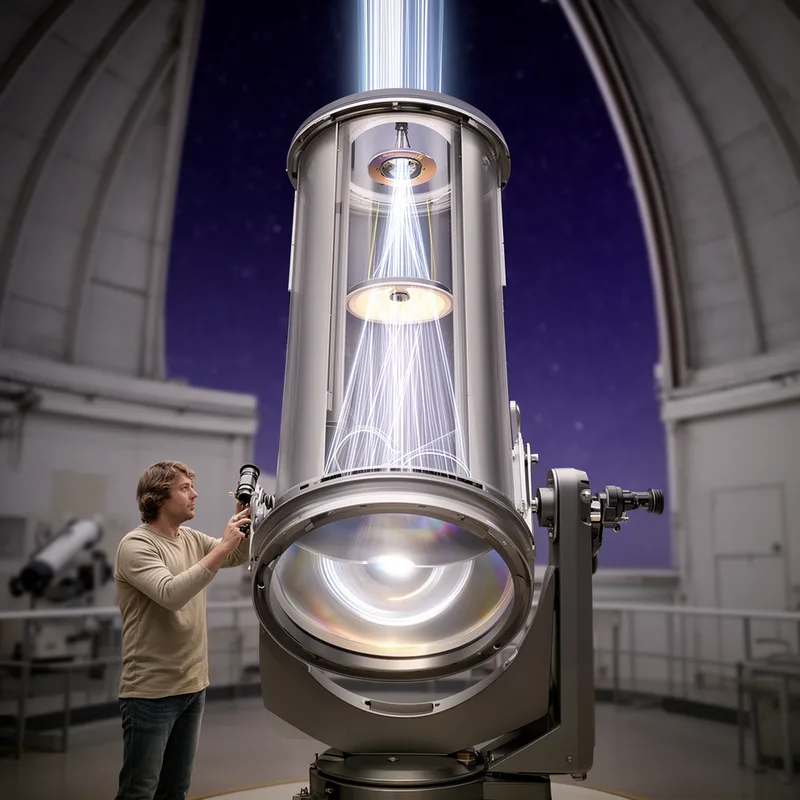
Cassegrain
- noun
- /ˈkæsəˌɡreɪn/
- Specialized
- The Cassegrain telescope is popular among amateur astronomers.
Examples
-
Many modern observatories are equipped with a large Cassegrain for deep space observation.
-
She learned how to align the mirrors in a Cassegrain during her telescope workshop.
-
The astronomer adjusted the Cassegrain to get a clearer view of the planet.
-
Many scientists prefer the Cassegrain design for its compact size.
-
Many modern observatories are equipped with a large Cassegrain for deep space observation.
-
The Cassegrain telescope is popular among amateur astronomers.
-
She learned how to align the mirrors in a Cassegrain during her telescope workshop.
Synonyms

 3
7.0
3
7.0

A telescope that uses a large curved mirror to make distant objects look closer
 1
5.5
1
5.5
A telescope that uses a large curved mirror to gather and focus light for looking

A reflecting telescope that uses two mirrors to send light back through an opening in the main mirror
How Complex
- Specialized

- Specialized
- Archaic
- Specialized
1
5.5
- Specialized
1
6.7
5
7.6
Surface Forms
Etymology
Cassegrain names a type of telescope that uses a large mirror and a smaller mirror to focus light, and the name comes from the French surname of Laurent Cassegrain, who described this mirror design in the 1600s. So, when you hear Cassegrain, think of a mirror-based telescope called after its creator.