

Camassia
- noun
- /kəˈmæs.i.ə/
- Specialized
- The meadows bloomed with distinctive blue flowers of Camassia during spring.
Examples
-
The Camassia species were historically important as a food source for indigenous peoples.
-
Botanists often study Camassia to understand the ecology of North American prairies.
-
The Camassia plant blooms beautifully in spring.
-
Many people enjoy cooking with Camassias.
-
Indigenous peoples traditionally harvested Camassia bulbs as a vital food source during the spring.
-
In the spring, the vibrant flowers of Camassia create a stunning display in the garden.
-
Many gardeners choose to include Camassia in their landscapes for its beautiful blooms and edible bulbs.
Synonyms

 1
9.9
1
9.9

A plant with grass-like leaves and star-shaped blue or white flowers

A plant with blue flowers whose bulbs people eat

A group of flowering plants with large edible bulbs found in North and South America

A plant with long grass leaves and blue or purple star-shaped flowers grown for its edible bulb
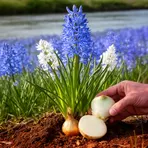
A plant with star-shaped blue or white flowers and a starchy edible bulb

A plant that comes back every year with blue or purple star-shaped flowers and an edible bulb

A wildflower that has blue star-shaped flowers and a large bulb you can eat
Compounds

- Specialized
A plant with tall stems of blue flowers that grows in western North America

- Specialized
A plant from western North America with a large edible bulb and tall stems of blue star-shaped flowers
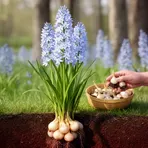
- Specialized
A North American plant with pale blue spring flowers and bulbs you can eat
Surface Forms
Morphology
Etymology
The word Camassia comes from the Native American word quamash, often seen as camas, which means 'edible bulb' and was the name for a plant people cooked and ate. That's why Camassia today refers to the blue-flowered plants with large bulbs that were an important traditional food.