

camas
 1
9.9
1
9.9

- noun
- /ˈkæməs/
- Specialized
- Under the oaks grew camas (Camassia quamash), wapato (Sagittaria latifolia), wild onions, and other bulb, root, and seed plants.
- Camas Prairie
Examples
-
The act paralleled the events leading to the war—that is, the destruction of the Camas Prairie and its crops by Anglo grazing.
Academic text (2000) -
Buffalo Horn demanded that they leave with their stock, claiming exclusive use rights of the Camas Prairie under the Treaty of Fort Bridger of 1869.
Academic text (2000) -
Do not pass over the camas root in silence.
Fiction book (2002) -
In May, the Bannock under Buffalo Horn arrived at Camas Prairie to harvest the camas and trade with other indigenous societies.
Academic text (2000) -
In spring, the fields were filled with camas, their star-shaped flowers creating a beautiful blue carpet.
-
The indigenous people often harvested camas bulbs for food, enjoying the sweet flavor they added to their meals.
-
At the botanical garden, I learned about camas and its role in the traditional diets of Native American tribes.
Synonyms

A plant with blue flowers whose bulbs people eat
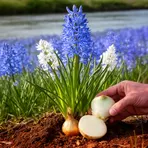
A plant with star-shaped blue or white flowers and a starchy edible bulb

A plant that comes back every year with blue or purple star-shaped flowers and an edible bulb

A plant with long grass leaves and blue or purple star-shaped flowers grown for its edible bulb

A plant with large edible bulbs and blue flowers used as food by native people

A plant from western North America with a large edible bulb and tall stems of blue star-shaped flowers

A wildflower that has blue star-shaped flowers and a large bulb you can eat

A plant with tall stems of blue flowers that grows in western North America

A plant with star-shaped blue to purple flowers that grows in moist meadows
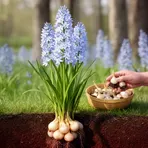
A North American plant with pale blue spring flowers and bulbs you can eat
Compounds
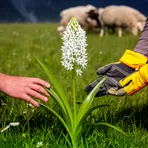
- Specialized
A plant with star-shaped blue to purple flowers that grows in moist meadows

- Specialized
A poisonous plant with grass-like leaves that kills grazing animals
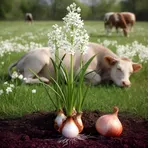
- US
A wild plant whose bulbs look like wild onions and can make animals or people sick

- US
A North American plant with white flowers that is poisonous to animals that eat grass
Surface Forms
Etymology
Camas comes from a Native American name for the plant, often written as quamash, which means an 'edible bulb'. Because people cooked and ate its bulbs, the name stayed, so camas now means the blue- or white-flowered plant known for its food bulb.