

Camassia scilloides
- noun
- Specialized
- The bulbs of Camassia scilloides were once an important food source for Native Americans.
Examples
-
Gardeners appreciate Camassia scilloides for its attractive blossoms and hardiness.
-
The Camassia scilloides blooms beautifully in spring.
-
Camassia scilloides blooms in the spring with tall spikes of pale blue flowers.
-
Have you ever tasted the bulbs of Camassia scilloides?
-
Camassia scilloides is known for its edible bulbs, which were a staple food for many Native American tribes.
-
In the spring, Camassia scilloides produces stunning clusters of light blue flowers that attract various pollinators.
-
Many gardeners choose to plant Camassia scilloides because of its beautiful blooms and resilience in various soil conditions.
Synonyms

 1
9.9
1
9.9

A plant with grass-like leaves and star-shaped blue or white flowers
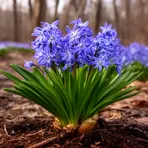
A North American plant with blue-violet star-shaped flowers that lives for many years

A plant with long grass leaves and blue or purple star-shaped flowers grown for its edible bulb

A plant that comes back every year with blue or purple star-shaped flowers and an edible bulb

A plant with large edible bulbs and blue flowers used as food by native people
Surface Forms
Morphology
Camassia + scilloides
This is a scientific binomial (genus + species) where the overall meaning is a specific plant name; if a learner knows 'Camassia' they can infer it refers to a Camassia plant, but the species epithet 'scilloides' is a Latin/technical element not transparent to a B1 learner and is not glossed here. Because part of the meaning (that it is a Camassia plant) is recoverable but the species-specific sense requires specialist or Latin knowledge, the expression is only partially transparent.
Etymology
Camassia scilloides may come from the Native American word 'camas' for plants with edible bulbs that people dug up, cooked, and ate, so the name helps you remember this is a bulb plant once used as food.