
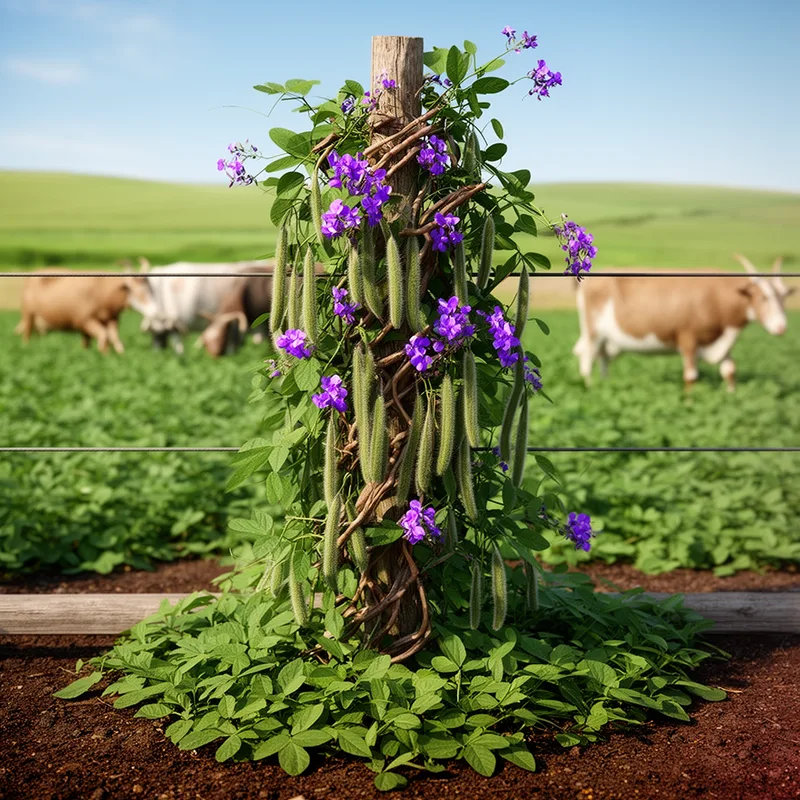
Benghal bean
- noun
- Archaic
- You can recognize the Benghal bean by its purplish flower clusters and hairy seed pods.
Examples
-
The farmer planted Benghal bean in the fallow fields to improve soil fertility.
-
Because of its dense foliage, Benghal bean provides excellent grazing for livestock.
-
Farmers often plant Benghal bean as a cover crop.
-
The Benghal bean thrives in tropical climates.
-
The farmer planted Benghal bean in the fallow fields to improve soil fertility.
-
Because of its dense foliage, Benghal bean provides excellent grazing for livestock.
-
You can recognize the Benghal bean by its purplish flower clusters and hairy seed pods.
Synonyms
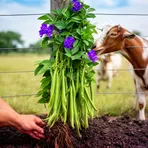
A climbing plant with purple flowers and long hairy pods used to improve soil and feed animals

A climbing plant with purple flowers and hairy pods grown to improve soil and feed animals

A one-year woody climbing plant with purple flower clusters and hairy pods grown to improve soil and feed animals

A fast-growing vine with purple flowers and hairy pods used as food for animals and to improve soil

A tropical vine grown as a cover crop to improve soil and feed animals

A climbing plant with purple flowers and hairy pods grown to enrich soil and feed animals

A climbing plant from Asia with long purple flower clusters and hairy pods used to improve soil and feed animals

A climbing plant people grow to feed animals and improve soil
Surface Forms
Morphology
Benghal + bean
This is a straightforward place-name + noun composition: if a learner knows that 'Benghal' (or 'Bengal') denotes a geographic origin and 'bean' is an edible legume, they can infer it names a type of bean from that region. Such origin-based naming is a common and regular pattern in English and many other languages, so the meaning is predictable from the parts even if the specific headword is rare in dictionaries.
Etymology
Benghal bean comes from the name of the Bengal area, where farmers grew a woody vine with long purple flowers and hairy pods. They planted the bean to 'feed animals' and to 'make the soil richer', so the name reminds us of the plant's place and use.

