
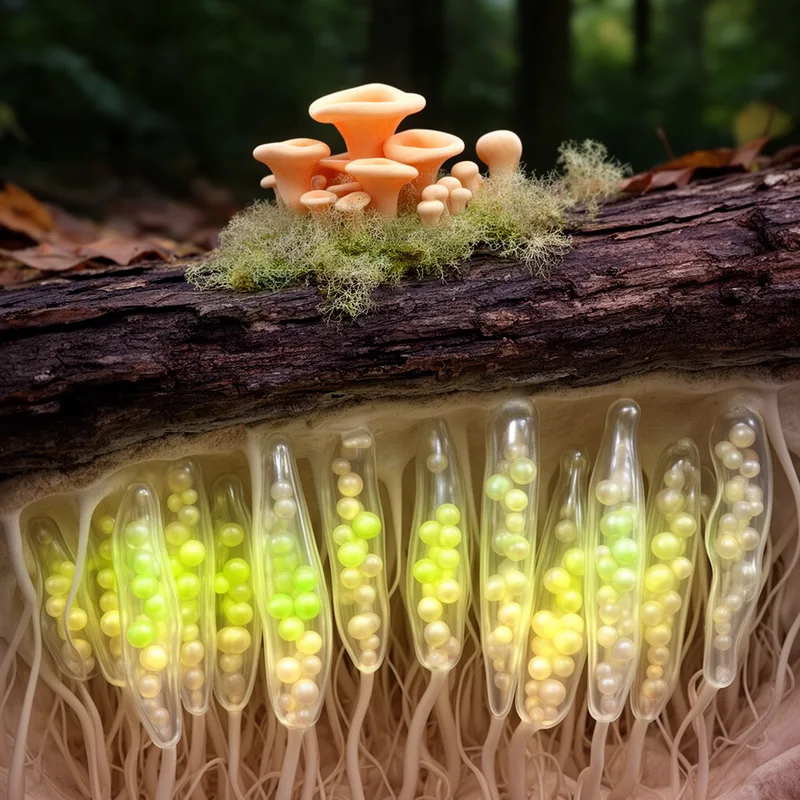
Ascomycetes
- noun
- /ˌæskəˈmaɪsiːtiːz/
- Specialized
- Pseudallescheria boydii—a ubiquitous, saprophytic fungus in the class Ascomycetes—is an emerging pathogen found worldwide.
- class Ascomycetes
Examples
-
The most successful of the early invaders are certain kinds of Ascomycetes, a large class of fungi that includes truffles and morels as well as most molds and yeasts.
-
Lichen, which belong to the class Ascomycetes, are not a single organism, but are composed of two very different kinds of plants.
Academic text (2000) -
Two other Ascomycetes were cankered.
Academic text (2010) -
Nine of the 16 pathogens were Ascomycetes, including four in the Diaporthales and four in the Ophiostomatales.
Academic text (2010) -
Aspergillosis is a fungal disease caused by Aspergillus fungus of the Ascomycetes group, which have a worldwide distribution.
Academic text (1995) -
The most successful of the early invaders are certain kinds of Ascomycetes, a large class of fungi that includes truffles and morels as well as most molds and yeasts.
Academic text (2001) -
Nine of the 16 pathogens were Ascomycetes, including four in the Diaporthales and four in the Ophiostomatales.
-
Pseudallescheria boydii—a ubiquitous, saprophytic fungus in the class Ascomycetes—is an emerging pathogen found worldwide.
Synonyms
A large group of fungi that produce spores in small sacs called asci

A large group of fungi that make spores inside small sac-like cases
Surface Forms
Morphology
Ascomycetes = Ascomycete (opaque) = asco + mycete + s
A technical taxonomic name built from Greek combining forms ('asco-' and '-mycete') that are not productive standalone English words, so the meaning is not derivable by an average B1 learner.
Etymology
Ascomycetes comes from Greek parts asco- meaning 'sac' and -mycetes meaning 'fungus', so these are 'sac fungi' that make their spores inside tiny sacs called asci.

