
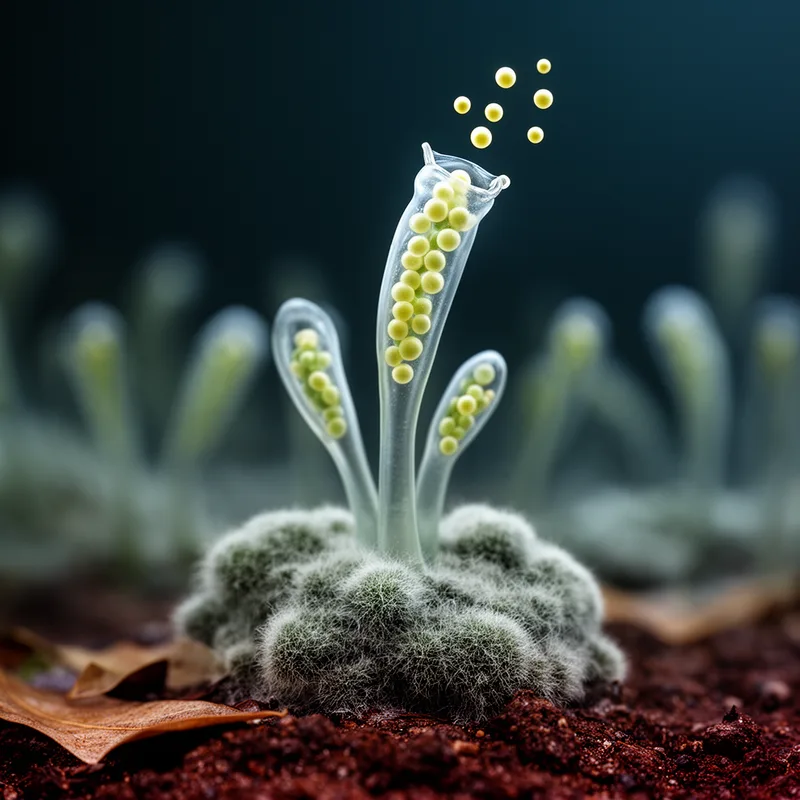
ascomycete
- noun
- /ˌæskəˈmaɪsiːt/
- Specialized
- The ascomycete fungi are unique in that they produce spores within a saclike structure called an ascus.
Examples
-
The ascomycete fungi play a vital role in the ecosystem.
-
The scientist identified the mold as an ascomycete based on its spore-producing structure.
-
Many common yeasts, including baker's yeast, belong to the ascomycete group.
-
Some ascomycetes play important roles in decomposing organic matter in soil.
-
Did you know that the ascomycete group includes yeast?
-
Many ascomycete fungi, such as those that produce penicillin, play important roles in medicine and food production.
-
You can find various types of ascomycete fungi, which showcase diverse shapes and colors, in ecosystems like forests and gardens.
Synonyms
A fungus that makes spores inside a small sac

A fungus that makes spores inside a small bag, like yeast or morels
Surface Forms
Morphology
ascomycete = asco + mycete
The word 'ascomycete' is a specialized scientific term with roots that are not standalone English words, making it opaque for learners without specific botanical knowledge.
Etymology
The word ascomycete comes from Greek parts asco- meaning 'sac' and -mycete meaning 'fungus', like in mycology 'the study of fungi'. So, an ascomycete is a fungus that makes its spores inside a small sac.

