

Ascomycota
9.9
A large group of fungi that make spores inside small sac-like cases
- noun
- /ˌæskəˈmaɪkə/
- Specialized
:
ascomicetos
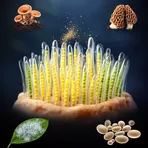
- The Ascomycota include a variety of fungi, such as yeasts and molds, which produce their spores in sac-like structures called asci.
Examples
-
Many edible mushrooms, like morels, belong to the Ascomycota phylum and are known for their unique flavor and texture.
-
The order Laboulbeniales (Fungi, Ascomycota) consists of obligate parasites living attached to the exterior of their invertebrate hosts, mainly beetles.
Blog text (12) -
Scientists study the Ascomycota group of fungi to understand their role in various ecosystems and their potential uses in biotechnology.
Synonyms
9.9
A large group of fungi that produce spores in small sacs called asci
is the broader common term also listing molds yeasts and morels

9.9
A group of fungi that make spores inside small sacs
is a more general group term, not just one taxonomic class
Surface Forms
Ascomycota singular
Ascomycotas plural
Morphology
Etymology
The word Ascomycota comes from Greek parts asco- meaning 'sac' and -mycota (from mykes) meaning 'fungus'. So Ascomycota are 'sac fungi', fungi like yeasts and molds that make spores inside small sac-like structures.

