

American oriole
- noun
- /əˈmɛrɪkən ˈɔriˌoʊl/
- US
- The bright colors of the male American oriole make it easy to recognize in the spring.
Examples
-
We spotted a beautiful American oriole perched high in the maple tree.
-
The American oriole sings beautifully in the spring.
-
Many birdwatchers hope to catch a glimpse of the elusive American oriole during migration season.
-
Did you see the American oriole in the tree?
-
Many birdwatchers hope to catch a glimpse of the elusive American oriole during migration season.
-
The bright colors of the male American oriole make it easy to recognize in the spring.
-
We spotted a beautiful American oriole perched high in the maple tree.
Synonyms

 7
7.3
7
7.3

A bright bird with orange and black or yellow feathers that sings

A bright singing bird from the Americas whose males have black and orange or yellow feathers
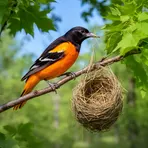
A bright orange and black songbird found in the eastern United States
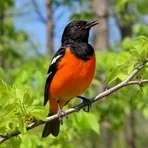
A small songbird with bright orange and black feathers found in eastern North America
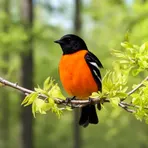
A small orange and black songbird found in eastern North America
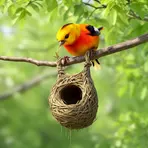
A small bright songbird that makes a hanging nest

A medium-sized bright orange and black songbird found in North America
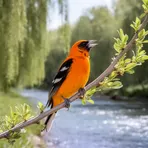
A bright orange and black songbird found in western North America
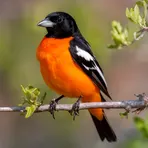
A western North American oriole with bright orange and black feathers
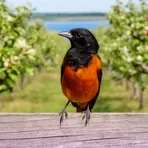
A small North American songbird whose male has chestnut and black feathers

A small North American oriole with chestnut and black feathers
Surface Forms
Morphology
The phrase is directly compositional: 'American' specifies geographic origin and 'oriole' names the songbird, so the combined meaning 'an oriole found in the Americas (a North American species)' follows straightforwardly from the parts. This simple adjective + noun pattern is cross-linguistically common and should be immediately understandable to a B1 learner who knows both constituents.
Etymology
American oriole gets its name from the old word oriole, which comes from a Latin word meaning 'gold' because the male's bright yellow or orange feathers look like little bits of gold. So the name simply points to a North American bird known for its golden colors.