
Age of Mammals


 1
5.8
1
5.8
- noun
- Specialized
- Although today connected to North America by the narrow Isthmus of Panama, South America was an island continent for the bulk of the Cenozoic era, the so-called Age of Mammals (from 65 million years ago to present).
Examples
-
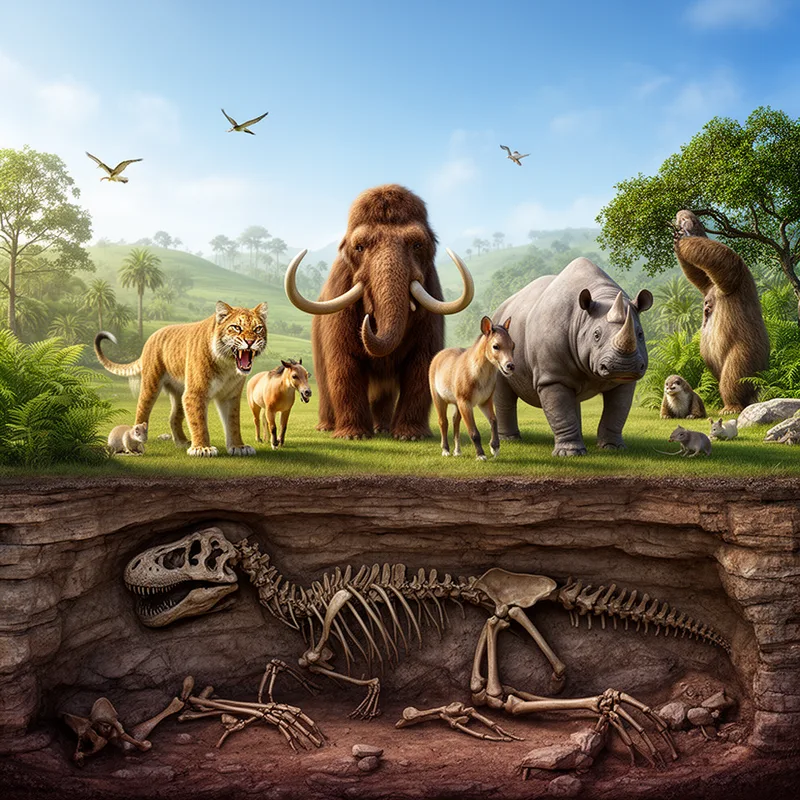
The Cenozoic, known as the Age of Mammals, marks the time when mammals became the dominant land animals.
-
The Eocene (55-33 million years ago) began what is sometimes called the Golden Age of Mammals.
Blog text (33) -
During the Age of Mammals, which began after the Mesozoic era, mammals evolved into the largest land animals.
-
Scientists study fossils to learn more about the Age of Mammals and how mammals adapted over millions of years.
Synonyms

A recent time in Earth's history since about 66 million years ago when mammals and birds became the main animals

The current geological era beginning about 66 million years ago
Surface Forms
Morphology
The phrase denotes a historical 'age' characterized by 'mammals', so the meaning — a period when mammals were dominant — is directly and compositionally derived from 'age' (a period) + 'of' + 'mammals' (the animal group). This follows a common 'age/era of X' pattern found across languages, so a B1 learner who knows the constituent words would readily infer the MWE's meaning.
Etymology
Age of Mammals The name Age of Mammals comes from the time after the dinosaurs died, when small animals called mammals spread out and became the main land animals. So age here means 'a long period when they were the main animals', which is why the phrase describes that part of Earth's past.