
Cenozoic era
- noun
- /ˌsɛnəˈzoʊɪk ˈɛrə/
- Specialized
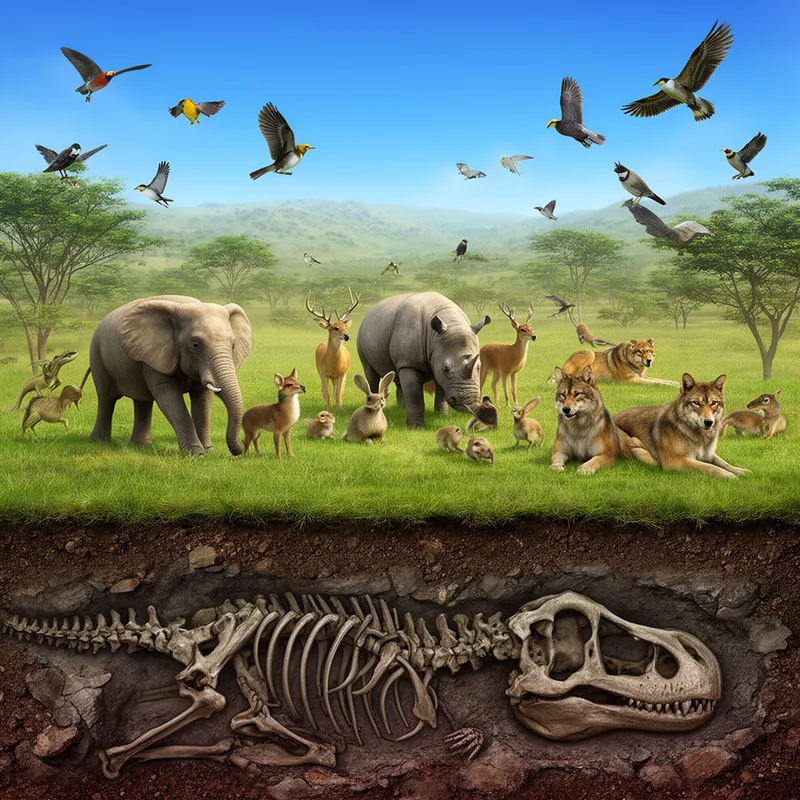
- The Cenozoic era is known for the rapid evolution and diversification of mammals after the extinction of the dinosaurs.
Examples
-
During the Cenozoic era, birds adapted to various environments, leading to the wide variety of species we see today.
-
Although today connected to North America by the narrow Isthmus of Panama, South America was an island continent for the bulk of the Cenozoic era, the so-called Age of Mammals (from 65 million years ago to present).
Academic text (2009) -
Mammal history during the Cenozoic era in South America is often informally divided into three time intervals, illustrated here with fossil and living examples of mammal groups that first appeared in those "strata."
Academic text (2009) -
It belongs to a group called notoungulates, native hoofed plant eaters that persisted in South America for most of the Cenozoic era, evolving a remarkable range of body forms.
Academic text (2009) -
Fossil records indicate that significant climatic changes occurred throughout the Cenozoic era, influencing the development of ecosystems.
Synonyms


 1
5.8
1
5.8
A long time in Earth's history since dinosaurs died when mammals became the main land animals

The current geological era beginning about 66 million years ago
Surface Forms
Morphology
The phrase is fully compositional: 'Cenozoic' names a specific geological time span and 'era' denotes a large geologic timespan, so together they simply refer to that named era. This pattern (named period + era) is cross-linguistically common and therefore a B1 learner who knows both constituents will readily understand the meaning.
Etymology
The name Cenozoic era comes from Greek words: ceno- meaning 'new' and -zoic meaning 'life'. So the phrase pictures a 'new life' time after the dinosaurs when mammals and birds became the main animals on Earth.